Just Ask – you never know…..Part 2

ego, Fear, Human Brain, Risks

In my last post on this topic I shared two real life incidents of how by just asking – they were able to get things. Both the people kept their egos and fear aside and checked and they were able to get things that they wanted.

Today we will look at why most people – including me , many times – end up with the mice rather than the antelopes.

The story goes that a lion is very much capable of capturing mice and eating them. But it does not hunt mice. It hunts antelopes. Mice are to be found all over the place, but antelopes are few and have to be searched. The lions also have to chase the antelopes to capture one of them, because antelopes can run very fast. But the lion still prefers to hunt the antelopes because the calorific value the lion gets by eating a mouse is not worth the effort. But when it hunts an antelope, it can keep the lion satiated for multiple days, so it’s worth the effort. A lot of times because we see the low hanging fruit we chase that, rather than chasing the worthwhile fruit.

Most of us have extremely big egos and / or a lot of fear. That stops us from asking questions. Given a chance most of us would be scared of even opening our mouth in front of a stranger. We would rather accept what is available without asking the question.

So a lot of times what “antelope” could have been yours, just disappears, because you didn’t ask the route to get the antelopes and stuck yourself in finding the “mice” because they were easier to find. Its all in our brain.

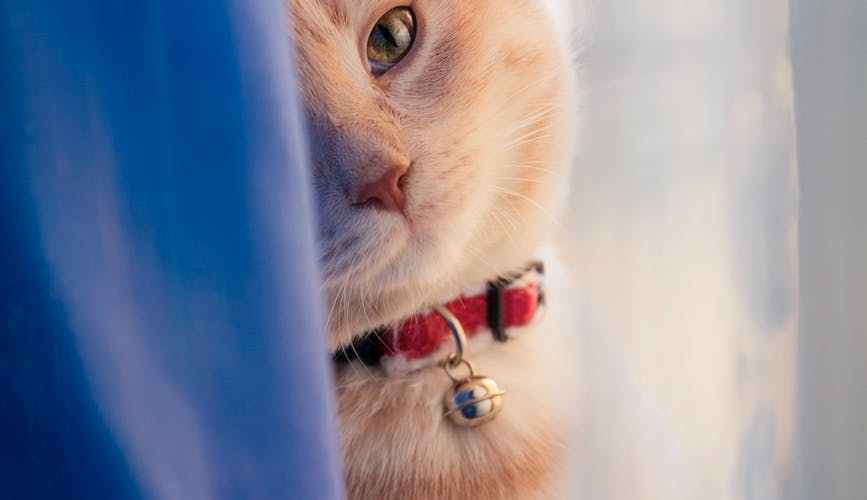
Our brain takes its primary role as survival and fears , asking a question may endanger you or your ego (people may laugh at you because you asked a stupid question or people may shout at you). In school I remember I was taught “curiosity killed a cat”. For a long time and quite a few times even now, this comes up at the back of my mind and stops me from asking questions.

But quite often its worth the try.

Till next time then……just ask…..curiosity doesn’t kill cats.

Carpe Diem!!!

Utilising thinking time – with structure

creativity, Flow, Focus, Habits, Human Brain, Thinking

In my posts earlier, I have shared with you some of the good tools I have found for focusing our time. I have especially liked the Dean Jackson video on Focus Finder. The methods he uses are simple yet profound. The key thing is that you have to ensure you are able to ensure you are able to pull out time for thinking activities.

Since we have so many things prompting us and drawing attention to them, getting dedicated thinking time is almost a rarity even for me. The challenge is that the brain has got so used to the idea of getting disturbed, that if you keep your phone away to concentrate on some activity, you actually feel guilty and end up seeing the phone just to ensure that you have not received an urgent call. The next off course is email. You dig into one and by the time you finish that there’s another one demanding your attention.

So inspite of so called success with some of the tools which have helped me, I have not yet been able to take maximum benefit out of the thinking process.

So I am working out to see how I can make thinking time a habit using the process suggested by B.J.Fogg in his book Tiny Habits. To make it useful I have also tried to incorporate a system of identifying the next problem to be solved in advance so that when I do get time to think, my brain is not going helper skelter, trying to figure out what needs to be done.

So yesterday when I tried solving one problem, I identified problems which are two layered below it. Meaning if don’t solve those problems, the problem I was trying to solve yesterday will not get solved. Therefore even though I did not solve the problem completely, the ideas that came to me during the thinking time, gave me some items to focus on to solve, before coming back to that problem.

Today since I did not have to think in terms of the problem to be solved, the moment I focused on the problem, my mind went into flow quickly before the door bell rang and disturbed me. But in that short time, with the problem to be solved, defined in advance, my brain was getting into action faster and came up with ideas much faster. If this can work, then I may not have the most elegant solutions immediately but would have started moving faster to solve challenges.

Please see if this works for you and let me know your views.

Till next time then.

Carpe Diem!!!

Thinking and Action – frameworks

Affirmative action, books, Flow, Frameworks, Habits, Human Brain, possibility thinking, problem solving

Till now I have been generally written about how the brain gets positive feelings when you do a gratitude exercise or when you do charity etc. This feeling helps your brain see more possibilities. This was actually topic of my last post. While all of this is true, I still was not able to figure out what will ensure that I keep taking action on a continuous basis because at the end of the day, just thinking won’t get you there, you need to take action.

This is not to degrade the thinking process. As a matter of fact if you spend time into thinking then the chances are that you will find a solution which may be extremely elegant and solve the problem. But you need to have the grit or persistence to work on the solution, figure out if it actually works, if it doesn’t, go back to the drawing board and find another solution.

How does someone ensure that they are always taking action. What will create that behaviour which will make me ensure that I am moving in the direction, to achieve my goals of the impossible while I am coming out with more creative solutions to handle my constraints.

While I am not sure if I have all the pieces of the puzzle in place for me, I do think that there’s a combination of things which I have observed when I have read the following 4 books – Tiny Habits by B.J.Fogg, The Art of the Impossible by Steven Kotler, A Beautiful Constraint by Adam Morgan & Mark Barden and Think Like a Rocket Scientist by Ozan Varol.

So two of the books – in no particular order – are about solving problems and handling constraints, one is about creating behaviours and the last is about taking your brain into a high performance agenda. over the next few weeks I will try to see if I can take out the best pieces of advice and put it into a framework for myself and see the results.

So there are some low levels activities which I completely stop doing – like writing emails. Then I create behaviours for small things which can make a huge impact for me, find processes and frameworks to resolve constraints – thinking tools and then get into flow to figure out creative solutions. If I can have prompts to help me do all this then I would have really figured out a way to not get stuck from time to time in time.

Once there’s a behaviour based on a habit, then my brain will also not get over worked. With the energy that I conserve, I may actually figure out even better solutions.

Is this too much of a fancy. I don’t know. Let me put it in action and see. I will keep you posted.

Till next time then.

Carpe Diem!!!

Habits – Path Dependence

Brain size, creativity, Energy, Habits, Human Brain, Uncategorized

I have generally been talking about how the human brain eats 25% of the energy that a body needs even though it is only 2% of the body mass. This is one of the reasons for procrastination in my opinion because the brain wants to conserve energy and by delaying the process of using the brain it’s able to save energy.

Since motivation is something which is fickle, you would rather convert something into a habit, so that it gets done automatically with a predetermined set of steps – something which B.J.Fogg explains very well in his book Tiny Habits.

Now the challenge with habits is that once formed, they are difficult to dislodge. So you become – literally a creature of habit. The human brain loves habits because they run on auto pilot, and don’t consume too much of energy. Since one of the key functions of the brain is to ensure your survival, the brain loves everything that does not consume energy so that it has enough when it has to figure out ways to survive.

With habits though you always follow a predetermined “path”.

However with changing situations in all our lives, you need to find ways to move away from the so called “beaten path” What made you successful then, will not make you successful in the future. Nokia realised it too late, Kodak realised it too late and there are a whole lot of other names that you can list. All these companies had put up terrific systems (equivalent of habits) to ensure economies, to ensure quality etc.

But the same systems got them blindsided.

Companies are also made up of people and when companies get blind sided, its the people who have actually got blindsided because they have become creatures of habit. To solve a new problem they use the same old tools, the same old sources of data which they have used earlier. But since the problem is new, the old tools don’t work and we are not willing to go back to first principles to solve the problem. Sometimes it pressure of time, sometimes revenue takes precedence and there are a whole lot of other reasons.

So the key thing to figure out is when to use creativity and when to go with something which has already proven useful many times before. When do you travel on the well tread path or choose a different road when you hit a fork.

As team leaders this is a problem which we face all the time and finding better ways to solve a problem is something that I am continuously looking out for. If you have found a way which helped you to creatively solve a problem pls let me know below in the comments.

Till next time then.

Carpe Diem!!!