Prioritizing top 2 or 3 – challenges -2

differentiation, execution, Marketing, Marketing Ecosystem, Methodologies, prioritizing, Product Management, route to market, segmentation, single target market

Yesterday I wrote about the issues which come up in prioritizing the top 2 or 3 for me, in my day-to-day life. This post will talk about the top 3 things in marketing that you need to address and the challenges which come up in real life situations because of revenue pressures.

In marketing if you summarize the issues with respect to lead generation or getting business then they would be

  1. Getting footfalls (incase of a store) or hits on your website or people coming to your webinar
  2. Cost of various media to get you the traffic
  3. Cost of converting the footfall into a buying public

Perry Marshall calls this the Traffic, Economics, Conversion combination. Within each of these three you can do a prioritization of the next top 3. Like I mentioned earlier 80/20 is fractal, so there’s always an 80/20 within an 80/20 forever, you just need to identify it. That will help you dramatically. I am amazed the amount of leverage I keep getting once I recognize the 80/20 in anything. Like I have been saying – small hinges move large doors.

Now something outside this equation is Reference customers. I would like to put this in category of itself, provided you already have a running business, because this can change the game in your favor dramatically.

Now every marketer would understand the things which I have listed above. But what happens is that there is pressure from sales for leads and while you start testing one item and things are not working out, you start analysing all the issues. In the meanwhile because there’s a pressure on revenue you try something in the short term to boost the revenues and the spiral starts and things go out of control.

During this time someone from delivery comes up with another product and sales being sales, they always want new products to take to the market and suddenly you are being pushed to launch the new product in the market.

The companies who do good in marketing are the ones who ensure that they don’t mess up the prioritization, focus on it to keep things running smoothly and then look at new product launches or sales pressures. Chances are if you have a system than the system will incorporate the failures that can take place and have a place to learn from them.

Master these priorities and you could be way ahead in your marketing.

Till next time then.

Carpe Diem!!!
Leverage

Leverage, Marketing, Marketing Ecosystem, relationships, Sales, Uncategorized

When you think of the word leverage it generally ends up with a negative image intended mind.  It sounds like being in debt.

In financial terms, leverage can have some negative connotation but today I am going to talk about the positive effects of leverage.

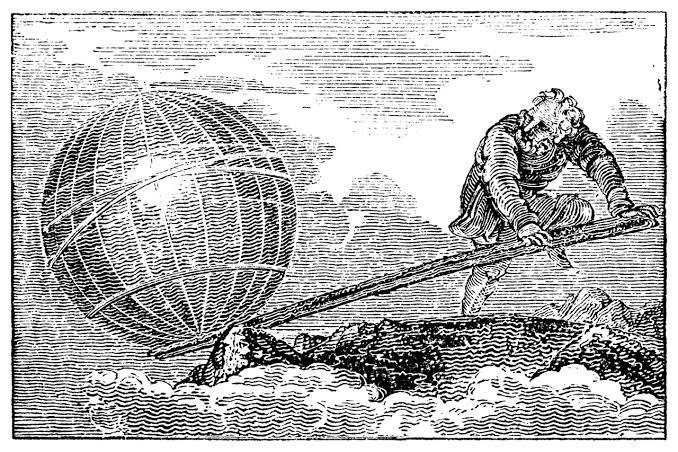
Archimedes is supposed to have said “give me a lever long enough and a fulcrum on which to place it and I shall move the world.” The biggest advantage of leverage that with very small effort you can achieve massive results. Little hinges swing large doors.

Moving in your car versus walking is leverage, automating a factory is leverage and all these help tremendously

In marketing (and sales also as part of marketing ) there are tremendous processes where we can leverage on things like automation etc.

But my favorite kind of leverage is relationships. These could be relationships with customers, relationships with vendors or your network. If you have enough good relationships in place, as Archimedes mentioned in a different context, you can grow your business dramatically.

However in any relationship is always better to give, before you get. That way the principle of reciprocity comes into play. Otherwise the person will feel exploited or used.

Other than relationships good sales people are tremendous leverage. A successful advertisement / message in one market can be leverage to get into other markets faster.

A CRM can help the new salesperson on speed faster to the accounts that she needs to target because all the historical information about the prospect is available.

A family of aspirational products and brands are also leverage for the company.

I would love to hear what is your favorite leverage in marketing or sales.

Till next time then.

Carpe Diem!!!

B2B Messaging – finding the most effective channel

B2B, Business, differentiation, differentiation, ideal customer, Marketing, Marketing Ecosystem, messaging, segmentation, single target market

In consumer items there are a lot of ways to reach a customer – television, print, social media etc. Depending on where your demographic audience is and how the psychographics work out, you could also use good old direct mail and leaflets and tele-callers.

In B2B markets there are unique challenges. There’s a massive fall in print magazine circulation especially the business focused magazines. Not sure how many people watch television to check out the next business strategy.

In the B2B market, mail does not reach the person on the desk, because a lot of times people don’t have a desk and are mobile. So the mail has to be collected by the person by going to the mail room. Since people don’t come to the office so often and with Covid19, even fewer are coming to office so no one visits the mail room and the mail you send does not reach the intended recipients. So if you are targeting professional services companies, financial services etc. I have found direct mail to be a tough ask.

On the other hand if you were looking at companies which were more into manufacturing, utilities etc. I would guess direct mail would work especially for the back office functions and factory / warehouse functions.

Email is a quick, free medium and that’s it very basic problem. In B2B all the people are inundated with mail and you get a fraction of a second on the mobile phone, before the person ignores or deletes your mail. That is if your mail even reaches the person’s mailbox, because the spam filters will block your mail if they even observe a single item in the mail which smells of spam.

Before the pandemic started, webinars was a good way to get people to join you and hear your message, but I am observing a definite sense of exhaustion with webinars. The registration and attendance and company sponsored webinars has fallen dramatically. It may still be possible to get some attendance if the webinar is being run by an industry body or an independent analyst or a reputed media group with some respected industry veterans.

As a B2B marketer I am always looking out for some effective ways to get in front my audience. By ensuring that I target a “single target market”, and try and target only my ideal customer profile, I try to learn from each interaction that we have with a client and see how we can incorporate that learning into our next interaction. Its always a good idea to send a personal email to a person so that the spam filters don’t think you are spamming. You try to use as much knowledge you have of the industry to make this email so that the person reading it finds it useful.

Please let me know in case you have found any other method to reach your prospects in B2B in the comments below.

Till next time then.

Carpe Diem!!!

Integrated Product Management

differentiation, Marketing, Marketing Ecosystem, Positioning, Product Management, single target market

I learnt a very important concept yesterday while watching a video of Brendon Burchard from the ilovemarketing mastery program by Joe Polish.

He was explaining about how he strategizes a book launch. A book launch is another form of a product launch with the product over here being a book.

I have been in Product Management for quite a long time and some of the concepts that he spoke about were standard.

However one thing which got me thinking and which you also need to understand if you are into Product Management is differentiating between ancillary products / services versus next set of products / services which are higher up in aspiration but are however part of a common ecosystem.

As per Brendon an ear phone, phone cover are ancillary while the iPhone, the iPad and the Mac all part of the integrated product set which Apple sell all the 3 items to their customer base all the time.

So even though Android is there with the so called “open” environment with a huge ecosystem, with full fledged interoperability and there are so many companies who sell more phones than Apple but no company makes as much money whether its with phones, tablets and computers.

This got me thinking. If you look at other companies who are really have ruled a lot of industries – the integrated product suite does come to mind.

IBM had their set of products and services which were generally all integrated. That was the biggest value to large customers who did not want the hassle of integrating products from different vendors. Customers could easily buy another set of products with a clear knowledge that they were safe because it was IBM. So even though a lot of companies came out with so called “open-systems” and individual discreet products, IBM had their clientele clearly defined and have been making a lot of money.

This has got me thinking. While we do think in terms of the next set of products/services that we should have in our suite, to clearly have an integrated suite where the customer has the comfort as well as the aspiration to take the next product from us needs to be thought off. We also need to clearly differentiate between ancillaries and next level of products so that we have 2 sets of revenue streams.

Pls tell me if you have had success with this kind of an integrated product suite. I would like to know your inputs in the comments section below.

Till next time then.

Carpe Diem!!!