Just Ask – you never know…..Part 2

ego, Fear, Human Brain, Risks

In my last post on this topic I shared two real life incidents of how by just asking – they were able to get things. Both the people kept their egos and fear aside and checked and they were able to get things that they wanted.

Today we will look at why most people – including me , many times – end up with the mice rather than the antelopes.

The story goes that a lion is very much capable of capturing mice and eating them. But it does not hunt mice. It hunts antelopes. Mice are to be found all over the place, but antelopes are few and have to be searched. The lions also have to chase the antelopes to capture one of them, because antelopes can run very fast. But the lion still prefers to hunt the antelopes because the calorific value the lion gets by eating a mouse is not worth the effort. But when it hunts an antelope, it can keep the lion satiated for multiple days, so it’s worth the effort. A lot of times because we see the low hanging fruit we chase that, rather than chasing the worthwhile fruit.

Most of us have extremely big egos and / or a lot of fear. That stops us from asking questions. Given a chance most of us would be scared of even opening our mouth in front of a stranger. We would rather accept what is available without asking the question.

So a lot of times what “antelope” could have been yours, just disappears, because you didn’t ask the route to get the antelopes and stuck yourself in finding the “mice” because they were easier to find. Its all in our brain.

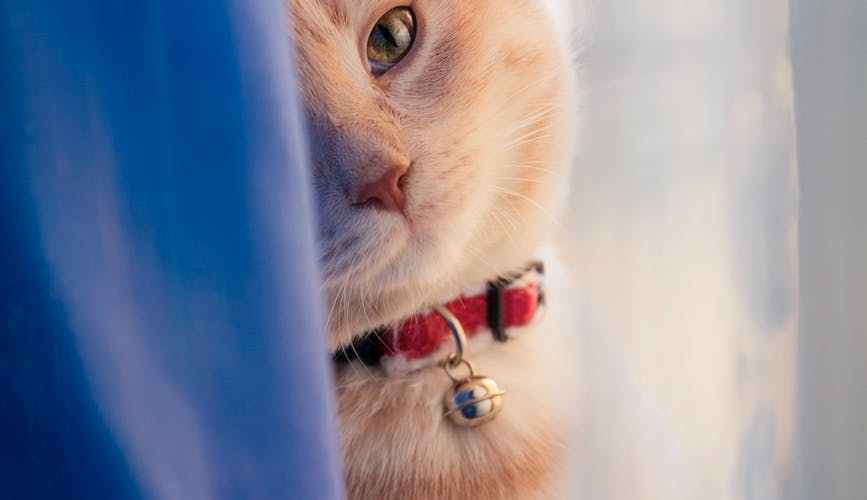
Our brain takes its primary role as survival and fears , asking a question may endanger you or your ego (people may laugh at you because you asked a stupid question or people may shout at you). In school I remember I was taught “curiosity killed a cat”. For a long time and quite a few times even now, this comes up at the back of my mind and stops me from asking questions.

But quite often its worth the try.

Till next time then……just ask…..curiosity doesn’t kill cats.

Carpe Diem!!!
Gratitude – it makes your more resilient

Decisions, Fear, Flow, Gratitude, Habits, Happiness, possibility thinking, problem solving

This was news to me. I have always spoken about being grateful for whatever we have in life instead of bothering about what we don’t have. This habit has held me in good state, because God has genuinely given me a lot to be thankful for. That doesn’t mean I don’t have aspirations, but I definitely don’t get anxious about things which don’t come my way.

What I learnt over the last few weeks is that gratitude gets more dopamine into your brain. That spike in dopamine helps the brain feel good. Since the brain is designed to make you safe always, it is always looking for the next point of danger. So the brain is always looking for the next negative item.

When the dopamine enters and the brain feels safe, it does not have fear. When it feels safe it is willing to think of more possibilities. The moment you get into a possibility mode, you tend to solve problems better, you take better decisions and better decisions help you get better in life. You get into flow state faster because negative things are not bothering you.

When you are able to solve problems, then your brain does not get frustrated with the impediments that come your way.

When impediments come your way, your brain goes into negative mode trying to visualise all the negative situations in a snowball effect. When that happens, your ability to think of solutions goes down. And you get further frustrated, which leads to anxiety and most health related problems start from there.

Therefor being gracious, having gratefulness, is extremely good for your health. when you have good health automatically you become more resilient handling tough situations physically also.

Till next time then, be grateful for all that you have.

Carpe Diem!!!

Procrastination – is it your brain playing games

Energy, Fear, Human Brain, procrastination, Productivity

Your brain occupies about 2% of body mass but uses upto 25% of the energy. Nothing new here. These facts are more or less known for a very long time. What was new to me when I was reading Steven Kotler’s book The Art of Impossible was the fact that the brain tries to conserve energy, so it tries to do tasks which require less energy and creates a resistance to anything new, novel, unknown etc.

I have been a big procrastinator all my life. And till now I used to feel the biggest reason for me to be like this was that I was scared, I had a fear – of just about anything. I have tried a lot of things to get out of this habit of procrastination and over the years have improved tremendously. One of the best things that I learnt was identifying the task which can have the most impact on my day and then finishing that one task, before moving to anything else.

When you have a team and you also have to coordinate with peers, you may not be able to close all things that you plan in advance.However for that I use my electronic calendar and shift the dates to follow-up with my colleagues and they remain on my calendar till completely closed. So in that sense I have become more action oriented, but there are still a huge amount of areas where I can be many times better, except for my procrastination.

Dan Sullivan has different take on procrastination, and he and Dean Jackson have a podcast called the “joyofprocrastination”. where they talk extensively about how procrastination is actually your friend. I have used some of their concepts also in my journey to improve my productivity.

However after I read the above facts in Steven’s book, it kind of made an “aha” situation for me. My brain resists my doing something new or unknown because it will have to spend more energy. Since the new or novel thing could also hurt me, it will have to do even more work to protect me.The more work it has to do, the more energy it will need to spend. Since the brain is also a pattern recognition system, it tries to keep predicting how things could shape up and therefore predicts the amount of energy it may end up spending. So it suggests avoiding the task altogether as an easy way out to conserve energy.

So now I know, I won’t blame myself for my procrastination habit. I will blame it on my brain for playing games with me. You could also check out and see if this logic holds good for you as well.

Till next time then.

Carpe Diem!!!

Generating “Trust” with the client – simple steps

B2B, Fear, Habits, Sales, Trust

When you are entering a new account as a sales person, “Trust” is by far the most difficult thing for you to get. If the customer has already been using your company’s product or service, then there’s some amount of trust that gets bestowed on you.

Especially if your company has done a good job or the sales person before you has done a good job, then the customer is more favourable to talk with you. However the customer still has to trust “YOU”

On the other hand if the account is new to your company and you as the sales person are also involved in creating the account then it becomes all the more important that you gain trust with the prospect fast. One of the biggest things which hampers a sale is TRUST. Price, quality of the product / service etc. are all issues which come into [play after the person trusts you.

Some of the simplest things I have observed for building trust are simple old fashioned things

  1. Keep your word – if you say you will do something by a given day or time – DO IT
  2. Arrive before the scheduled time always – No one likes to be kept waiting and that too for a sales person – there will be times where things can go wrong inspite of all your planning – in that case inform the customer well in advance
  3. Communicate every step of the way – even if you don’t have a solution ready for the problem – which will happen many times in your career – keep the customer informed that you have a problem and you are working to solve – the customer is also answerable to someone else and if he doesn’t have information he will get more frustrated. The customer may get angry with you for a little while but after he/she vents their anger, they will still be friends. Most of the time the people get scared of the customer and try to hide. This kind of Fear will only create problems in your long term relationships.
  4. Don’t consider your customer as an adversary – Till you get the order, everyone is very nice to the customer. The challenge starts when they become a Customer. The customer has certain expectations and your delivery folks have their own challenges and any objection by the customer becomes a “me versus you” situation. You have to make your team understand , that in B2B situations especially, the customer has more at stake than you because of her reputation at the organisation is at stake. If you can look at it as a joint effort then it solves the problem.

None of these steps have any technology related issues, they don’t need any hi-tech software or equipment etc. These are just human habits and behaviours which you need to cultivate and slowly you will observe people will automatically gravitate towards you and start trusting you.

Till next time then.

Carpe Diem!!!