Leverage

Leverage, Marketing, Marketing Ecosystem, relationships, Sales, Uncategorized

When you think of the word leverage it generally ends up with a negative image intended mind.  It sounds like being in debt.

In financial terms, leverage can have some negative connotation but today I am going to talk about the positive effects of leverage.

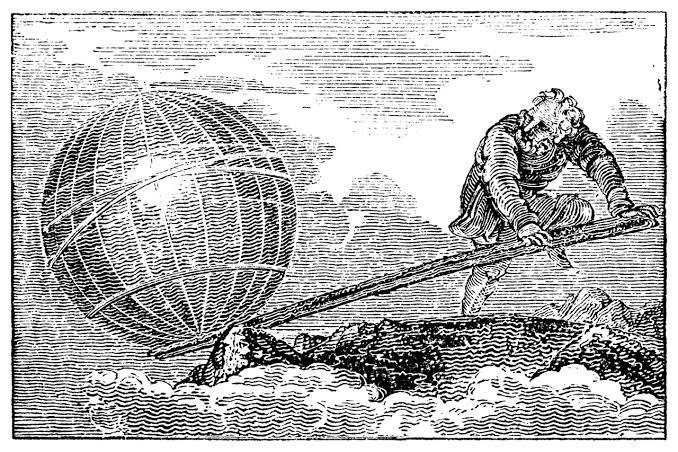
Archimedes is supposed to have said “give me a lever long enough and a fulcrum on which to place it and I shall move the world.” The biggest advantage of leverage that with very small effort you can achieve massive results. Little hinges swing large doors.

Moving in your car versus walking is leverage, automating a factory is leverage and all these help tremendously

In marketing (and sales also as part of marketing ) there are tremendous processes where we can leverage on things like automation etc.

But my favorite kind of leverage is relationships. These could be relationships with customers, relationships with vendors or your network. If you have enough good relationships in place, as Archimedes mentioned in a different context, you can grow your business dramatically.

However in any relationship is always better to give, before you get. That way the principle of reciprocity comes into play. Otherwise the person will feel exploited or used.

Other than relationships good sales people are tremendous leverage. A successful advertisement / message in one market can be leverage to get into other markets faster.

A CRM can help the new salesperson on speed faster to the accounts that she needs to target because all the historical information about the prospect is available.

A family of aspirational products and brands are also leverage for the company.

I would love to hear what is your favorite leverage in marketing or sales.

Till next time then.

Carpe Diem!!!

Identifying the dissonance for engaging a B2B customer

B2B, Business, competition, Marketing, Marketing Stamina, messaging, persistence, segmentation, single target market

With B2B customers, as I have mentioned earlier in my earlier posts, its difficult to get instantaneous decisions because of various reasons. These could vary from inertia to customers having to do cross functional team decisions, budgets and the works.

In most cases until the dissonance with the existing supplier is so large and repeated that the customer can no longer bear it, they don’t change. However in a bundle of 1000 prospects, the Dean Jackson “inevitability principle” eventually kicks in and some incumbents falter and that’s when you get a chance to stake your claim.

Now you need to be in front of the customer to stake your claim. In addition you should, on a consistent basis keep highlighting the possible challenges the customer could be facing.

For this you need to know your competition well. Competition could be from a company or an alternative technology. You need to understand the places competition is weak and then work your messaging to highlight the challenges the customer could be facing because of the those issues. These messages need to be about “rubbing salt over their wound” so that the pain gets even more highlighted.

Its not always possible to know all the challenges until you ask the customer and then hypothesize for others – since you have already focused on a narrow segment of the market. So if you get in front of a customer on the phone or in person or via web you need to check if they value the benefits that you offer versus what the incumbent does not have. You will then realize for yourself if those benefits matter to a decent set of your audience.

Once you have done that then the the key is to be persistent because we don’t know when the customer will decide to change. Also since customers do more than 60% of their research in the sales cycle even before they call the vendors, if you are not in front of them when they are doing the research, you won’t even get considered.

Till next time then.

Carpe Diem!!!

Product Marketing questions I am pondering on

Marketing, Product Management, Questions, single target market

I have been reading the book The Road Less Stupid…… by Keith Cunnigham.

One chapter which has had me thinking extremely seriously is on Simplifying Growth. The reason it has got me thinking so much is that it is very closely related to product management and marketing.

It has all the related dimensions that I keep talking about how you need to go about marketing, yet when it comes from a third party and you read it, the significance of what is being written becomes even more striking.

Some of the questions which are given in this chapter which I am pondering about are

  1. What has to happen for the customer to cause them to buy from me
  2. What must happen to keep them coming back
  3. What could happen to cause them to not buy

These are extremely deep for a product manager to look at. If you can get a crystal clear answer on these you can build your product marketing strategy very well.

If you choose a broad market then answering the above questions will be very tough if you are releasing a new product in the market. If you choose a very fine niche in the market then you can clearly answer them and build a much better plan.

Test it out and let me know in the comments below.

Till next time then.

Carpe Diem!!!

Single Target Market – Determining the viability in B2B

B2B, Business, differentiation, Marketing, Marketing Stamina, persistence, segmentation, single target market

I have consistently been harping on the fact that you need to find a niche in the market and a market in the niche. Finding a market in the niche is the critical part in determining if the market is even worth looking at. This is not about prioritizing on the different niches. Its about discarding a niche all together. Please understand that B2B buying is generally not impulsive. Which means you need to play this game over a long term.

For priortising of niches we will have a separate discussion.

Criteria for the B2B segmentation / niche viability

  1. Your average deal size – recurring or one time
  2. Gross Margin
  3. Number of addressable prospects in the niche

Lets look at bundles of 100 or 1000 addressable prospects and I will share a simple model to do a quick calculation of the viability of the market.

Lets say you have a B2B prospect base of 100 and each deal is worth $100000/- per annum recurring. Which means the whole market is worth $10m per year and over a 5 year period if you were to be able to pick up 20 clients you can get a revenue of more than $20m cumulative approx. That’s a good market to be in, because with referrals and other things put together this market may actually end up being very large. Even at a 20% gross margin in 5 years you would make about $4m.

On the other hand if your average size deal was only $1000/- per annum recurring, then the market in 5 years may not be more than $200 thousand. Even if you make 50% gross margins, you will make at the end of 5 years about $100K.

So depending on the size of your average revenue you decide if the size of the niche is viable. The same $1000 product in a niche which has 1000 prospects could be worthwhile over a 5 a year period if you were able to pick up an share of 20% of the clients.

I have found that looking at a bundle of less than 100 tends to be scary because you don’t know how many of the clients will actually move away from their incumbent vendors. From a 100 prospects, Dean Jackson’s inevitability principle will lead to around 20 prospects in 5 years coming your way because some incumbent will make errors and if you are in front of the customer on a regular basis they will end up calling you just because they see you as persistent. A lot of time people don’t have the marketing stamina to last that many years.

Try working with this model and let me know if you found this useful.

Till next time then.

Carpe Diem!!!