Time and leverage

Leverage, Productivity, scaling

In one of my A-ha moments recently, I learnt a very useful lesson. I keep talking about using leverage (not debt – for those of you who are exposed to financial markets). There are various kinds of leverage – with say automatic machines weaving cloth versus people weaving cloth. Suddenly you have one machine producing more than a 100 weavers could do in a day.

Your wordprocessor and spreadsheets are all examples of leverage. One of the best examples is 80/20 and its fractal derivatives.

But each of these things have their own constraints. What once started by increasing leverage, then becomes standard operations and then you find the constraints in that.

So what was the A-ha moment. Time is limited and is the same for everyone. However leverage is infinite. The more you keep using leverage the more you can get more out of the time you have.

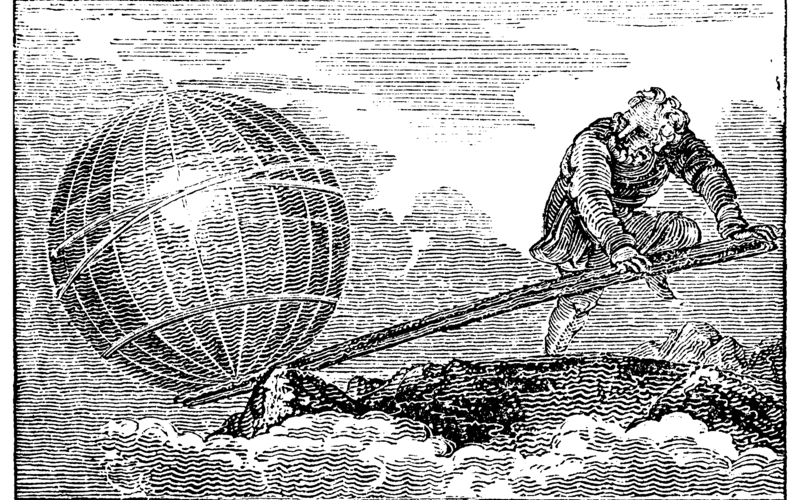
No wonder Aristotle had said – you give me a lever long enough and a fulcrum and I can move the earth.

All the highly productive people are very highly leveraged and if they constantly keep looking for finding leverage points then there’s an infinite amount of productivity they can achieve. Isn’t that amazing.

So a couple of weeks back I spoke about how I am trying to identify points where my brain gives me resistance and try to work my way through those to improve my outcomes.

Now in addition to that I am also looking at how I can find leverage points and see how far I can go.

Will keep you posted on my progress.

Meanwhile if you know of ways to improve leverage, please share in the comments section below.

Till next time.

Carpe Diem!!!

Leveraging on soft assets in the market

assets, Leverage, Marketing, possibility thinking, Riding the elephant

I have always spoken about “riding the elephant ” a philosophy which is extremely useful when you are a small player trying to get into a new market.

Sometimes you have a  reverse scenario.  You have something “deep ” in the market. It could be relationships withkey customers, some typically solutions which only you have, or a place in a specific location.

I remember there was a time about 20 years back, when the company I used to work for used to do trainings for internal staff. So there were multiple training rooms. These training rooms had servers, individual desktops etc.with individual network connectivity.

Many a times, these training rooms used to be vacant. Since we had already spent capital in setting up these class rooms, if left vacant, they were only getting wasted. At that time we were going through a crunch and had to figure out what other possibilities existed for making profits.

So we went about figuring out who else could need training rooms with the specifications that we had. Necessity is the mother of invention. To utilize the asset we had, we now needed to find a buyer who would use the asset only at times when we didn’t use it.

Jay Abraham is a master at building and utilizing these kind of assets. I used the strategies he lists in his book to figure out how we could leverage. We figured that companies could use these rooms, but not everyone needed the individual computers, so those companies were not willing to pay a worthwhile amount. Then we thought of software companies who need to get trainings done both for their staff and customers.

That was the master stroke. Once we could get a handle of who owned customer trainings in these companies, we showed them the rooms and to top it we offered to take care of 2 meals and tea/coffee during the sessions.

It became so good that some of the people who came for the training then asked us about our primary business and we ended up making some of them, our customers for the main business as well.

This was pure profit because the asset had already been paid for, so increasing the utilization only increased the profits.

Till next time then….leverage on what you have and count the gains

Carpe Diem!!!

Domino effect….can also be non linear

books, Leverage, Productivity

Generally when we think of the domino effect,  we generally think in terms of small rectangular tablets lined up in a sequence standing at the thin edge. You just push one of them and slowly one after another they all fall down in a sequence.

It’s a visual treat to watch these blocks fall.

What I didn’t know is that you can have dominoes of different sizes lined up similarly from the smallest to the largest and if you push the smallest one, it can make all the dominoes to fall.

I learnt this while reading the book The One Thing by Gary Keller. As per him you could have the same domino effect work out if the next domino in line is upto 50% larger than the previous one. What this in effect means is an infinite leverage is possible because of the non-linear progression you can get by making each domino 50% bigger than the previous one. This can have a major boost for productivity.

The premise of his book is that if you were to do only one thing, you should do the one which would ensure that all the others get done automatically or with very little effort

The theoretical meaning of this fact is that you can have enormous leverage available to you if you can identify that smallest domino in a sequence, which if pushed can make all the other dominoes fall. It sounds similar to the work of a catalyst in a chemical reaction.

Since I am a big fan of leverage, I have seriously started looking at the arguments which Gary has placed forward and trying to experiment with them.

While the logic seems to be in place I need to figure out how will I make a it a practice to regularly identify the key domino.

Will keep you pasted.

Till next time then.

Carpe Diem!!!

Incidentally

Debt versus liability

Debt, Leverage, Liabilities

I have written earlier that I have been reading this book, Killing Sacred Cows…… by Garrett Gunderson.

Based on my own life experiences , where I was in so much debt from all sides , I have come to a conclusion that I will not take any debt for consumption items, especially credit card debt. Wherever I do have to use my credit card, because of “single shot” payments, I ensure that I pay it out within the period of free credit.

Otherwise I am absolutely against borrowing money and taking leverage of any kind.

Garrett on the other hand has come up with a very interesting take between liability and debt.

He says you will always have to take a liability to get an asset. One cannot exist without the other. If the liabilities exceed the assets you have then its debt. You should get rid of this debt at the earliest.

On the other hand if you can service the liabilities with your cash flow and it helps increase your assets then you should borrow. Effectively if you are buying a productive asset rather than a consumption asset, then you should borrow. As per him if you have to leverage your ability to add more assets then you should borrow.

Now in some situations there can be a thin line between consumption and production.

I am right now thinking about how do you go about classifying expenses as being done for productive reasons. Some could be clearly identified such as having one car to improve mobility versus three cars for lifestyle. Even that could be debated by some though.

But how should I look at taking a holiday to get new experiences. The experiences help me de-stress and therefore make me more productive in the long run. Should I be willing to borrow to fund the experiences rather than directly fund with cash and liquidating some assets.

I need to get a wrap around this idea. It could actually be a game changer.

Will keep you posted.

Till next time then.

Carpe Diem!!!