Marketing lessons to learn from the success of Singapore

Leverage, Marketing

LEVERAGE YOUR ASSETS

Merry Christmas and Happy Holidays!!!

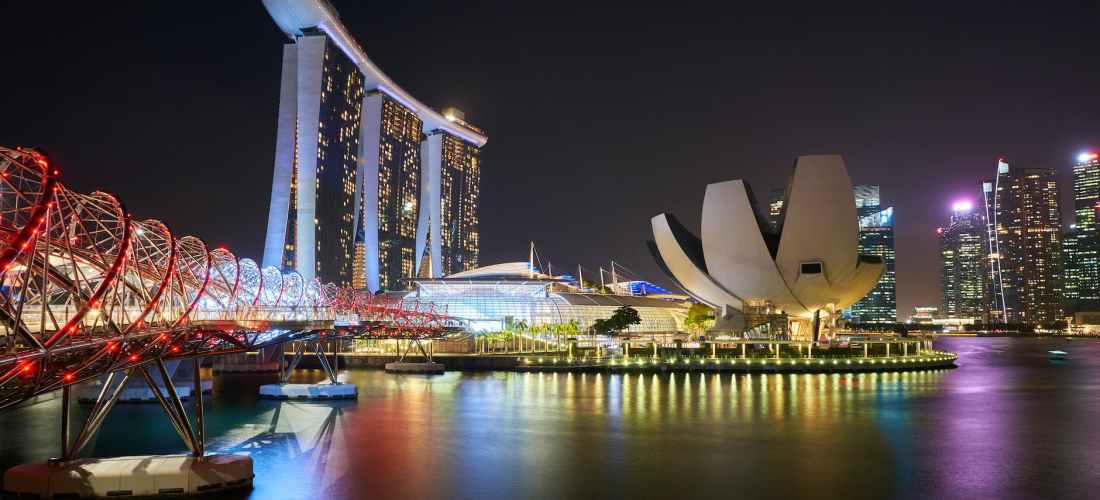
Recently I visited Singapore with my family. I used to visit Singapore on office work, very frequently, during the years 2000-2005, but I had not visited it since 2005. This visit was therefore close to 18-19 years since my last visit. During those years, what a way Singapore has changed. I was viewing Singapore as if I had come there for the first time. Except for may be the Orchard Road, Little India, China Town and the Night Safari, everything else, seemed new to me.

This made me all the more curious. Singapore has over the years gone on to become one of the richest countries in the world with a GDP per capita of $82000/ – which is way more than the GDP per capita of $57000/- about a decade ago. And this is despite the fact that Covid had taken a big toll on the tourism industry in Singapore.Last year about 6.3 million international tourists had arrived in the country – which is roughly same as the population of the country. This is much better than 2021 but much lower when you compare it with the numbers in 2013 onwards. At that time they would get almost 2-3 times this number according to the website Statista.

Now if f you look at Singapore’s geography, they are an extremely small country. They are right in the middle of the Indian Ocean with other nations like Indonesia, Malaysia surrounding it. Yet it is the most developed country in that region.

Services contribute a major portion of the revenue of the nation – but within those, in my opinion it is

  1. Trade
  2. Global finance &
  3. Tourism .

This is where I think the actual study comes in. I am not sure if there’s a thought to the process, but Singapore has made its so called weaknesses as its strengths. It is continuously upping the ante on its competitors by leveraging on the resources that it has.

Let’s start with the first item – Trade.

Singapore is one of the busiest ports in the world. They have taken advantage of their position in the middle of the Indian Ocean to ensure, that they are the hub for all the ships moving to&fro between Europe, Africa and Asia towards, Japan, China, Korea and Australia/New Zealand. They have ensured that they continuously upgrade their technology and machinery so that they have the most efficient ship handling facilities in the region such that there is a quick movement within the port.

Even the Changi airport is the 5th busiest airport in the world. With most people/goods wanting to go towards Australia , New Zealand, Philipines from India etc. preferring to stopover or take a connection via Singapore. The airport itself has been made so efficient that inspite of being such a busy airport, you never have a feeling of being rushed, because of crowds.

Now lets look at the second item – Global Finance

Singapore has the most well articulated legal system and very stable laws. Any finance organisation looks for stability and rule of law. So even though it’s a very small country a lot of the finance activity that takes place in the ASEAN and South East Asian region, happens out of Singapore. There was a time when Hong Kong had (that time as a British colony) a lot of finance industry, but since Hong Kong has merged with China, a lot of the finance industry prefers to operate out of Singapore. The other advantage because of its location is that, the time difference between all the nations in the Asia Pacific region and South East Asia is not more than 3-4 hours. Which means that people in all the countries can coordinate with their offices in Singapore in almost real time. Again leveraging its location.

And finally the third item – Tourism

Tourism is a big-time employer. Whether it’s hotels, eateries, momentos, taxis, it creates jobs all across. With more 6 million tourists that visited last year, it is almost the same as the population of Singapore. But to ensure that tourists keep coming year after year, Singapore has had to reinvent itself continuously. Since it doesn’t have a very old history – say like India – or mountain ranges like say Switzerland, Singapore has to keep doing things within its limited area to get in tourists by the hoards. All the children who visited Singapore in the 80s and 90s remember Sentosa island. So now they have added Universal Studio, Madame Tussaud’s and more to all the activities that existed at Sentosa. For me therefore, it was a completely new experience visiting Sentosa.

Tourism also needs, safety of the travellers. Singapore excels in that. And now if you add the efficiency of the airport, which can bring in millions of passengers, you have each strength playing into another.

In subsequent posts, I will dissect the tourism, part further and how its such an amazing marketing case study.

Till then….

Carpe Diem!!!

The biggest competition for you is Inertia of the customer

B2B, competition, Customers, Decisions, niche, Sales

One of Newton’s laws of Motion is – Law of Inertia – Nothing moves unless a force is applied on it.

As a sales person, for you the biggest competition you will face, is with the customer, not wanting to change the status quo. The customer always has a choice

  1. Buy from you
  2. Buy from your direct competition
  3. Buy something else which can solve the problem – albeit not the same way – but solve it does
  4. Remain with the status quo

It’s very nice when the customer buys from you. All the hardwork put up by you and your team, during the sales cycle, pays off for you and your company. In case of the second situation, where your direct competition is involved, you can take steps to pre-empt the competition, from taking away the sale. But to be fair to them, they may actually be better than you, in some cases. Either their solution is more apt for the customer or the sales person involved understands the customer better or she has a better relationship with the customer.

If the customer solves the problem with a different method, then you could be caught off-track. When I was involved in selling single and dual loop process controllers, a lot of times , after, SCADA systems became more affordable in India, I found, customers thought it better to go in for the complete SCADA system, rather than buying a controller for 2 processes. In other example, a person may prefer to travel by road instead of taking a flight. So the airline company lost the deal while the petrol/gas companies and hotel companies got business. In either of these situations the customer did go for a solution, it may not have been the solution which was being sold by you.

The worse situation is when after putting in months of effort, you realise that the customer is not willing to change. This is more painful in case of high value B2B sales, where multiple teams have to be involved to create a solution for the customer.

In B2B situations, the easiest situation for the customer is to not change anything. If it ain’t broke, why change. Change can mean that the new product/service will not work. If it doesn’t work, the peer level pressure that the manager will face will be enormous. It will be the manager’s failure, which will be highlighted to her forever, until and unless she works in an organisation which likes to try new things to succeed.

Sometimes it is easy to find out if your solution is moving forward or not. At other times you have to question the assumptions at different levels of the company’s hierarchy to identify if there’s any chance that your solution will be held back to maintain status-quo. It sometimes happens that you may have a sponsor at the lower level of the organisation, who wants to adapt your solution, but her manager may disapprove because she is scared of failure.

It may also happen that the benefits that you believe your solution will bring to the customer, is not what the customer believes. In that case it is your responsibility to showcase the benefits. On the other hand if the benefits are only going to “move the needle” marginally, then the customer may not be interested in moving forward and taking the risk.

The best way I have found, though not always successful 100% of the time, is to question the customer(s) on why they want to go in for the solution. What is the benefit they are assuming the solution will bring for them and why is the benefit(s) important to them. And then check this same thing at different levels of the hierarchy. If at any time you notice a dilemma or a “Re Flag”, you need to get cautious and keep digging till you find out.

If you focus on any niche in the market, then this becomes a lot easier to handle, because 80% of the issues that companies have will be similar and you can learn to unearth the issues in advance.

Till next time then ….. identify if your customer has any inertia holding them back.

Carpe Diem!!!

Understanding the priorities of the B2B customer

B2B, prioritizing, Sales

To achieve your sales targets

Most of my posts are generally related to marketing and not direct sales. This one is , however directly related to a major issue that sales managers face when leading a sales team selling to B2B customers.

When you lead a sales team, you build your forecast based on the probability given to a deal by the sales person. If the sales person doesn’t understand the priority of the customer, then she may ascribe a probability which she believes, but the customer doesn’t believe.

For any solution that is provided, there’s an impact that the product/service has on the business. The higher the impact, the better is the chance that the sale will happen fast. However their is another variable, that needs to be understood. That is about the urgency, from the customer perspective. Only if the Impact is high and the urgency is high, then the sale will happen, fast.

Here I am talking mainly about products/services that are being bought for the first time. If its a repeat purchase, where, everything is known and its only a matter of routine, then the logic, in the preceding paragraph doesn’t matter.

Now returning back, to my earlier argument, if the impact is low, but there is an urgency to get something done, then the order will get placed fast. For example, a company may be wanting to revamp their website. They already have an existing website. So getting the new website may not directly have a major impact to the business. But if it’s something that has been getting delayed for a long time, then the order will get formalised fast.

On the other hand, if something can improve production by 30%, but if the investment needed or the amount of disruption it can cause are high, then management may not treat it as so urgent. It may be good to have, but since nothing is “broken” yet, it gets pushed into the back burner.

Then there are the obvious cases, where, the customer thinks that they don’t want to experiment with a new technology and they pass the project forever.

So now it’s important that the sales person understand and question the customer on their priorities, the impact the product/service will have on their business and the urgency for doing it.

There will also be cases, when the management wants to showcase some new initiatives to their share holders or there is a new government ruling. So even though the impact may or may not be large, it suddenly acquires urgency. By questioning the customer on their reason, for wanting to go for the new product/service, you will be able to understand the dynamics which is playing out internally within the company.

That will make the sales forecasts more reliable. It is always better to have a few cases, where the probability is certain , versus lots of cases, where the probability is suspect.

Till next time then.

Carpe Diem!!!

Entering a new technology based B2B business – Part XII

B2B, checklist, Marketing, Technology

Targeting to become the market leader in 5 years

This is the last part of the 12 point checklist that I follow to identify whether we might be able to succeed with a new product or service line. Originally I intended to call this post – Targeting to dominate the market. But then I realised that the word dominate could also have negative connotations. So I renamed it as becoming a market leader. However in the content, you will see the use of the word “dominate”. The idea is only to bring out a forceful point.

In the last post, I brought out a concept of Life Time Value of a customer. This is a concept, I first came across, while reading books by Jay Abraham. Subsequently, a lot of other US authors/marketing consultants also wrote about it.

This is a fairly simple concept. If you pick up an order from a customer, and you provide them with a good experience, then what is the amount of business, she can give you over an extended period of time, that she remains a customer. This can define at what value you can acquire a customer, such that in the long run you can make a profit which is much higher, than if you had not acquired a customer.

Related to this concept is also the concept of becoming a market leader. So you look at any business and see if you can be a dominant player in that market. When that happens , the momentum also helps you bring in business.

But to be able to dominate the market, you need to be able to identify the total market size. Then you need to see, how much business will you be able to pick up in a year, then two years etc. Now if, in 5 years, you think you can pick up a substantial part of the overall market, and at that revenue level you are making good money, then its worth getting into the market.

On the other hand, if you realise that even after 5 years – either you are not able to pick up enough business or even if you can pick up the business, you can’t make profit, then, its not a market worth entering.

Combined with the life time value of a customer, you can determine the marginal cost of acquiring a new customer, and then the velocity that you can create, because of repeat orders, referrals etc.

If on paper you can work this out, and it’s profitable, then you actually go out into the market and test your hypothesis. At the end of the day, the market determines your success or failure. But if you have taken care of as many challenges, that can occur, you increase your chances of success.

To the success of your product / service launch.

Carpe Diem!!!