Product management concepts for a consumer company -2

B2B, differentiation, differentiation, ideal customer, Marketing, Positioning, route to market, segmentation, single target market

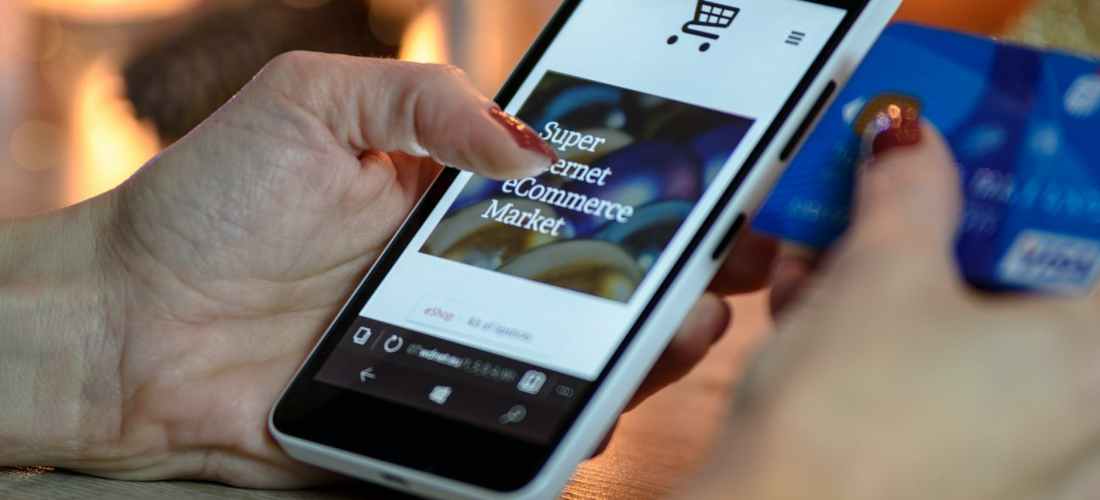
Product management is actually a much stronger discipline with consumer companies – both in the FMCG and White Goods space. What has happened with the e-commerce companies is that they have actually taken the whole consumer marketing concept to a different scale. Having said that, all the companies which are successful even in the e-commerce space, have followed the basics of marketing / product management to the core.

What started this series of posts was the fact that while these companies were burning massive cash, they were still enjoying heavy premiums when they get listed in the stock market. So is it that they are blindly burning cash or is there a method to the madness.

I highlighted some of the concepts in yesterday’s post. Today let’s look at other things like Single Target Market. Amazon today is a very big market place where they sell their own products as well as provide a platform for others to sell and take a commission on items sold. But Amazon only started by selling books initially. They did not try to get into selling everything at once. And they just sold books first in the Americas before expanding.

Look at another company Uber – they were only the ride hailing App. They did not get into the Uber Eats or the Uber Connect till they had taken a dominant position in that market. Similarly Zappos – which is now part of Amazon – was only into selling shoes.

Generally when I talk of concepts and give ideas for targeting the customers, building partnerships, I speak from the perspective of a small or mid-sized company which is wanting to get into the market. So some of the ideas are very specific.

However the same concepts at a different level are also applicable over the e-commerce space. So while Amazon is a big daddy in the retail products space, a small start-up in India “Nykaa” started with just selling cosmetics and related products to ladies. Today if you want even a French perfume in India, your first port (in this case App) of choice would be Nykaa. Its become such a big brand for the cosmetics and related categories. Similarly in the fashion space its “Myntra”. These companies segmented the market even within e-commerce and specialised in certain areas and have made a success out of it.

So principles of marketing and product management won’t change, what could change is the scale, the risk and the delivery mechanisms.

Till next time then.

Carpe Diem!!!

Product Management concepts for a consumer company

B2B, differentiation, ideal customer, Marketing, Product Management, Profitability, Risks, single target market

When you see the large venture capital backed companies burning cash month on month you wonder if the general concepts of Product Management / Marketing are valid, these days, for a consumer facing company.

There is one dynamic to keep in mind – the principles of Product Management / Marketing have not changed, what’s changed is the availability of money at extremely low rates – in most developed countries the interest rates are hovering at or less than 1% on bank deposit . In Japan just a few months back interest rates had actually gone negative.

If you keep this in mind where cost of money is so low, people are looking for ways to get a higher return on their investment so the propensity to take risk is higher. If the cost of money would be say at about 5% on bank deposits, then the propensity to put in risk capital would be different. That’s also one of the key reasons that the stock markets are at a record high even though countries have been facing lockdowns.

Now inspite of this these VC based companies are generally not stupid. The VCs do put in checks and balances to ensure their money does not sink.

So the burning of cash is part of a strategy to acquire customers. This would only succeed if the life time value of a customer is known. This principle is true for any kind of product or service you get into. If you know the life time value of a customer then you can actually buy customers because you know that if they are happy they will buy more often from you and also refer others to you.

The second is the convenience factor / inertia factor. Once you have given some customer a good service and they get used to the convenience of working with you, they will generally end up buying from you because the cost of getting another vendor is quite high. In case of B2B customers the number of processes to complete to get a new vendor empanelled are so large that procurement teams want to limit their vendors. In case of consumer products, its so difficult to understand another new “app” to order items. So you go ahead and order again on an “amazon” just because your card is already loaded and you can buy without hassle.

The other factor is critical volume . In the “app” based consumer companies the network effect plays a big role. So the larger the customers and vendors on a platform they feed into each other to create a positive snowball effect. Due to this in any market you cannot have more than two “amazon” or more than two “uber” kind of companies.

In B2B business also something similar happens with critical volume. If you look at it about 25-30 years back there were at least 5-6 prominent ERP vendors including SAP, Oracle Financials, MFG Pro etc. today there are only 2 primary companies in this arena. This is because based on the number of installations, the number of technical people needed goes up, so do salaries so more people train themselves to avail this opportunity. Slowly the availability of trained manpower becomes one of the key reasons to choose a product.

So in my opinion the principles of product management / marketing don’t change. The methods / platforms for delivering the product / service may change as technology changes. In my next few posts I will cover other principles like Single Target Market, Ideal Customer profile etc.

I would love to know if any of you thinks otherwise.

Till next time then.

Carpe Diem!!!

Who’s your customer?

B2B, differentiation, ideal customer, Marketing, Marketing Ecosystem, messaging, Product Management, Sales, segmentation, single target market

This is one of the most critical questions for any product management person or a marketing person and further any sales person.

I have written various articles on this same topic taking a hit at it from various angles. Some people people call it the Ideal customer profile, some the single target market.

The critical issue is that person and what could be going on in the mind of that person which will make him think about talking to you, responding to your message, asking for your white paper etc.

Understanding this one concept is such a core to all of marketing that not addressing this one issue will cause all your differentiation be useless.

Inspite of so many years doing marketing, if I get this one thing wrong, my whole plan goes for a toss. Sometimes your colleagues will tell you that its such a small slice of the market so you should expand your attributes. Slowly you start diluting the ideal profile and the marketing becomes cluttered and the message does not attract anyone.

You also need to be clear therefore on who is not going to be your customer , so that when your message starts getting diluted your alarm bells start ringing.

Once you have clearly defined this customer – even in B2B – its a person whom you will need to profile, then the company, then the industry. What’s going on in the mind of that one person, who else is selling to that person, what could be the challenges of that person. There’s no doubt its more difficult to do this profiling than it’s to do for the consumer segment because there are many more people involved in a B2B environment.

On the other hand its easier to profile industries, loss or profit making companies etc. because that data is publicly available. In addition you have tools like Linkedin which can help you identify the colleagues of the profile, you can identify the statements made in the public by their executives etc.

Once you are clear on this one aspect, then the other things like the economics, the batch size of the market, the go to market strategy, the marketing ecosystem you need etc. become easier to handle.

Till next time then.

Carpe Diem!!!

Generating “Trust” with the client – simple steps

B2B, Fear, Habits, Sales, Trust

When you are entering a new account as a sales person, “Trust” is by far the most difficult thing for you to get. If the customer has already been using your company’s product or service, then there’s some amount of trust that gets bestowed on you.

Especially if your company has done a good job or the sales person before you has done a good job, then the customer is more favourable to talk with you. However the customer still has to trust “YOU”

On the other hand if the account is new to your company and you as the sales person are also involved in creating the account then it becomes all the more important that you gain trust with the prospect fast. One of the biggest things which hampers a sale is TRUST. Price, quality of the product / service etc. are all issues which come into [play after the person trusts you.

Some of the simplest things I have observed for building trust are simple old fashioned things

  1. Keep your word – if you say you will do something by a given day or time – DO IT
  2. Arrive before the scheduled time always – No one likes to be kept waiting and that too for a sales person – there will be times where things can go wrong inspite of all your planning – in that case inform the customer well in advance
  3. Communicate every step of the way – even if you don’t have a solution ready for the problem – which will happen many times in your career – keep the customer informed that you have a problem and you are working to solve – the customer is also answerable to someone else and if he doesn’t have information he will get more frustrated. The customer may get angry with you for a little while but after he/she vents their anger, they will still be friends. Most of the time the people get scared of the customer and try to hide. This kind of Fear will only create problems in your long term relationships.
  4. Don’t consider your customer as an adversary – Till you get the order, everyone is very nice to the customer. The challenge starts when they become a Customer. The customer has certain expectations and your delivery folks have their own challenges and any objection by the customer becomes a “me versus you” situation. You have to make your team understand , that in B2B situations especially, the customer has more at stake than you because of her reputation at the organisation is at stake. If you can look at it as a joint effort then it solves the problem.

None of these steps have any technology related issues, they don’t need any hi-tech software or equipment etc. These are just human habits and behaviours which you need to cultivate and slowly you will observe people will automatically gravitate towards you and start trusting you.

Till next time then.

Carpe Diem!!!