Lead generation challenges for small IT B2B businesses – Part 2

B2B, lead generation, Marketing, niche

In the last post I spoke about how, by identifying a Single Target Market, Small B2B technology businesses can become better at generating leads. I even spoke about how marketing and sales have to incorporate psychology more than plain analysis to attract the desired audiences.

So in this part, we will look at how we can help get our message better addressed to our audience , so that they connect with us, respond to us etc.

There are typically two methods for getting leads – the “pull” method or the “push” method. By its very nature, the word push means that you are pushing something against a resistance. While in the pull method, the person is being “pulled’ or “attracted” with what you say or do and wants to interact with you and therefore responds to you. There is now right or wrong method. Both have to be used to get leads. However with the “pull” method or also called the marketing driven leads, the advantage is that the prospect has shown interest in what you offer and therefore has reached out to you.

For marketing however, the biggest challenge is to be able to convince someone, with the messaging, so that they can comprehend the message and then respond back with an inquiry.

But even before you can convince someone, you have to be able to reach that person. This is where by targeting a “Single Target Market” ,at a time (which we covered in our earlier posts, can be seen here), you reach a focused audience.

The analytical aspects of reaching out and convincing are related to the number of people being targeted, the number of mails that reached, the CTR, etc.

Now come to the psychological aspect of marketing and how you can utilise this aspect.

Humans have 5 senses – smell, see, feel, hear and taste. If you use one medium – say email with text, then the other side will only read it. So they will only use one of their senses – viz “see”. On a podcast, they can only “hear”. In a video or film , they can hear and see. By utilising the 2 senses together, your message can have a better impact.

As per Cisco, by the year 2022, more than 82% of all Internet traffic would account for with video. People recognise the power of audio+visual since ages. Films have impacted us so much – whether it was Ben-Hur or Star Wars . This does not mean that there won’t be people who would like to read or would like to listen. Different people have different preferences, but as a marketer, when you are trying to make an impact video/films have a larger impact because they utilise the power of the human brain.

Watch the video here

When you use videos to showcase how you have helped others, how you have solved problems for others, similar to themselves, then it creates more trust. Since the brain comprehends better with the use of two senses, if the customer is facing a problem, similar to what you have solved, then they are able to immediately apply it to their scenario and think – “we should check them out”. That gets them to reach out to you – a “pull” lead. The more “pain” in the problem that you show in the video and it is relatable to others in the same industry, the higher the chance that you will be able to get someone to say “tell me more”. This is where the psychology comes into play.

Even though the customer has replied back to you of his own volition, it doesn’t mean that he is ready to buy from you. In most B2B scenarios, there is an elongated buying cycle which starts with someone being told to first do the research on different options, then figure the budget etc. This cycle doesn’t apply in case there is a disaster and someone needs something “right now”. As an example, if you have had your roof destroyed in a cyclone or tornado, you need to figure out a solution now and will not go through your usual buying process. Similarly in organisations if say there is flooding in a data centre, then they need to figure out, how to keep the systems running, NOW.

Other than the disaster scenarios, B2B buying is process driven and you need to nurture the lead over the process. We will take this up in the coming posts.

Till then .

Carpe Diem!!!

Lead generation challenges for small IT B2B businesses-1

B2B, Marketing, Positioning, segmentation, single target market

One of the big issues that small, B2B technology businesses face is that they try to be everything to everybody. They think that if we were to limit the market then, they may miss opportunities. A lot of technology businesses have mainly engineers driving various functions. They are very good at analysis, but marketing also has to do with a lot of psychology.

My team also has this challenge and I have to keep reigning-in their continuous “want” to try and spread the “net” as wide as possible.

One of the questions which I have to keep answering are typically like:

What if we don’t get a response to our email campaign. If we send it to many more people at least someone will respond

This is a very enticing statement – at least someone will respond. You however don’t know how long it will take before that “someone” will respond, because you don’t know the amount of time it will take to reach that “someone”. Every organisation has limited bandwidth. To be able to reach the whole “universe” of your “someone” it may take years. Everyone will be busy in the organisation, but you won’t get any results and after spending 6 months or 1 year, you will not know what you did right or wrong.

I have written multiple posts about the concept of a “Single Target Market” , at a time, which I took from Dean Jackson. All marketing books talk about segmenting and finding a niche. But when you limit your thinking to a single target market, then you focus your energy only on targeting that “one”market.

When you are segmenting, or finding a niche, depending on the interests of the people doing the segmentation, they may may make it very wide or very narrow. However the phrase “Single Target Market” makes it very clear that you are looking at “unique”, “Only One” , “Single” part of the whole market. Watch my video below to get a better understanding of this.

/

/One way to figure whether the Single Target Market that you have thought of is the right one one, can be figured with the following process. If you are willing to be paid only after the client gets the result, then you have the confidence that you can successfully execute for that market. If you have doubts, then you need to recalibrate your hypothesis.

Once you have isolated your focused market, you can then go about checking the market potential, first on paper and then testing your hypothesis. If you run tests quickly and your hypothesis doesn’t work out, then you either adapt your offering/messaging/value proposition or you change the market. You learn your lessons fast and you adapt your offering faster.

But by doing it this way, you are quickly testing at a low budget if the market cares about your offering or not. You will live to fight another battle. If however you target a very large market space and can’t figure out where things are going wrong, then before you know, you will run out of money to sustain your operation.

There’s no doubt that it’s sexy to be able to tell people that we can do every thing. Today Amazon, ships almost everything. But Amazon started by just shipping books. As they became better at selling books, they launched other items. Each time they launch a new geography they follow a similar formula. But if you try to become Amazon on day one, you will be grounded very very fast.

Another question then that comes up is “what if” the customer we are targeting in the single target market, doesn’t need what we offer. Then you need to do more homework on your hypothesis before going out in the market. The more well defined your hypothesis, the better your tests will be.

So if you think an offering is good for the auto industry, then you need to think, how are the customers solving the problem right now and why should they listen to what you have to offer. I have a whole series of posts covering these points, which is basically my checklist for launching a new product or service into the market. I would suggest you visit those posts to get a more practical understanding of the process.

Till next time then.

Carpe Diem!!!

Marketing lessons to be learnt from the success of Singapore

differentiation, Marketing

Create a “pull” with differentiation

As I mentioned in my last post , Singapore is such a small country in the middle of the Indian Ocean and yet it has gone on to become one of the richest nations with one of the highest per capita incomes. One of the things that I emphasised, in the last post, was how Singapore has leveraged its assets.

This time I will talk about how it has gone about creating differentiation for itself, one of the key attributes for success in marketing.

To ensure that tourists keep coming into the country, you have to keep coming up with things that are not available in the vicinity, so if tourists need to see that thing, they have to come to Singapore only.

Let me take my example only. As I had mentioned, in my last post, I had been going frequently to Singapore and yet this time when I went, I had found, so many things had changed. One of the things that I wanted to visit , was the Universal Studios at Sentosa. Reason. We don’t have a Universal Studios showcase and rides anywhere close to India. I would have to go to Los Angeles in the US, to show my family, the Universal Studios. For me, with Singapore, Universal Studios was in my neighbourhood. So it made sense for me to go to Singapore. 3 tourists got added. Similarly there is the F1 race track. The Lego museum etc.

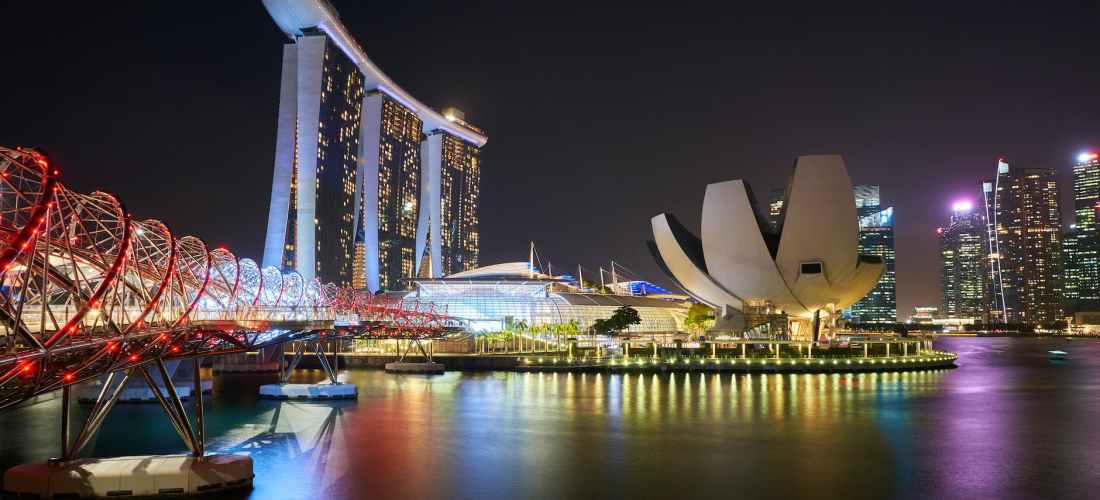
There was a time that there was the Night Safari and the bird park, the aquarium etc. in Singapore. But a lot of countries, now have these attractions and if you have visited the aquarium in HongKong or Toronto, you may not find this very different. So to ensure that there is something different for the tourist to see, they have the Universal, the Marina Bay attractions etc.

Can you imagine creating a whole zone for fans of the movie Avatar. At the Marina Bay, they have created the zone. Even people who have not watched the movie Avatar and knows about their characters, tend to go there, just because everyone else has talked so much about it. No where else will you get this creation

There are a lot of small nations in the Indian Ocean, but none of them , has anything which can get me to visit them. Singapore has created the differentiation by bringing in so many tourist attractions at one place, that people find it convenient to go there. Indonesia/Bali have natural beauty, Thailand has beaches, but so many entertainment points at one location, that’s only in Singapore.

Now if you add, the English speaking population and the absolutely secure environment that the country provides to tourists, it makes for a default destination to visit.

In marketing, people will keep coming up with me-too items to reduce your advantage. If you have to sustain your competitive advantage, you need to keep coming up with ways to show ho you’re different from the competition. If you can differentiate clearly, in the eyes of the customer, you have a “winner” on your hands.

Till next time then.

Succeed by differentiating.

Carpe Diem!!!

Marketing lessons to learn from the success of Singapore

Leverage, Marketing

LEVERAGE YOUR ASSETS

Merry Christmas and Happy Holidays!!!

Recently I visited Singapore with my family. I used to visit Singapore on office work, very frequently, during the years 2000-2005, but I had not visited it since 2005. This visit was therefore close to 18-19 years since my last visit. During those years, what a way Singapore has changed. I was viewing Singapore as if I had come there for the first time. Except for may be the Orchard Road, Little India, China Town and the Night Safari, everything else, seemed new to me.

This made me all the more curious. Singapore has over the years gone on to become one of the richest countries in the world with a GDP per capita of $82000/ – which is way more than the GDP per capita of $57000/- about a decade ago. And this is despite the fact that Covid had taken a big toll on the tourism industry in Singapore.Last year about 6.3 million international tourists had arrived in the country – which is roughly same as the population of the country. This is much better than 2021 but much lower when you compare it with the numbers in 2013 onwards. At that time they would get almost 2-3 times this number according to the website Statista.

Now if f you look at Singapore’s geography, they are an extremely small country. They are right in the middle of the Indian Ocean with other nations like Indonesia, Malaysia surrounding it. Yet it is the most developed country in that region.

Services contribute a major portion of the revenue of the nation – but within those, in my opinion it is

  1. Trade
  2. Global finance &
  3. Tourism .

This is where I think the actual study comes in. I am not sure if there’s a thought to the process, but Singapore has made its so called weaknesses as its strengths. It is continuously upping the ante on its competitors by leveraging on the resources that it has.

Let’s start with the first item – Trade.

Singapore is one of the busiest ports in the world. They have taken advantage of their position in the middle of the Indian Ocean to ensure, that they are the hub for all the ships moving to&fro between Europe, Africa and Asia towards, Japan, China, Korea and Australia/New Zealand. They have ensured that they continuously upgrade their technology and machinery so that they have the most efficient ship handling facilities in the region such that there is a quick movement within the port.

Even the Changi airport is the 5th busiest airport in the world. With most people/goods wanting to go towards Australia , New Zealand, Philipines from India etc. preferring to stopover or take a connection via Singapore. The airport itself has been made so efficient that inspite of being such a busy airport, you never have a feeling of being rushed, because of crowds.

Now lets look at the second item – Global Finance

Singapore has the most well articulated legal system and very stable laws. Any finance organisation looks for stability and rule of law. So even though it’s a very small country a lot of the finance activity that takes place in the ASEAN and South East Asian region, happens out of Singapore. There was a time when Hong Kong had (that time as a British colony) a lot of finance industry, but since Hong Kong has merged with China, a lot of the finance industry prefers to operate out of Singapore. The other advantage because of its location is that, the time difference between all the nations in the Asia Pacific region and South East Asia is not more than 3-4 hours. Which means that people in all the countries can coordinate with their offices in Singapore in almost real time. Again leveraging its location.

And finally the third item – Tourism

Tourism is a big-time employer. Whether it’s hotels, eateries, momentos, taxis, it creates jobs all across. With more 6 million tourists that visited last year, it is almost the same as the population of Singapore. But to ensure that tourists keep coming year after year, Singapore has had to reinvent itself continuously. Since it doesn’t have a very old history – say like India – or mountain ranges like say Switzerland, Singapore has to keep doing things within its limited area to get in tourists by the hoards. All the children who visited Singapore in the 80s and 90s remember Sentosa island. So now they have added Universal Studio, Madame Tussaud’s and more to all the activities that existed at Sentosa. For me therefore, it was a completely new experience visiting Sentosa.

Tourism also needs, safety of the travellers. Singapore excels in that. And now if you add the efficiency of the airport, which can bring in millions of passengers, you have each strength playing into another.

In subsequent posts, I will dissect the tourism, part further and how its such an amazing marketing case study.

Till then….

Carpe Diem!!!