Marketing lessons to learn from the success of Singapore

Leverage, Marketing

LEVERAGE YOUR ASSETS

Merry Christmas and Happy Holidays!!!

Recently I visited Singapore with my family. I used to visit Singapore on office work, very frequently, during the years 2000-2005, but I had not visited it since 2005. This visit was therefore close to 18-19 years since my last visit. During those years, what a way Singapore has changed. I was viewing Singapore as if I had come there for the first time. Except for may be the Orchard Road, Little India, China Town and the Night Safari, everything else, seemed new to me.

This made me all the more curious. Singapore has over the years gone on to become one of the richest countries in the world with a GDP per capita of $82000/ – which is way more than the GDP per capita of $57000/- about a decade ago. And this is despite the fact that Covid had taken a big toll on the tourism industry in Singapore.Last year about 6.3 million international tourists had arrived in the country – which is roughly same as the population of the country. This is much better than 2021 but much lower when you compare it with the numbers in 2013 onwards. At that time they would get almost 2-3 times this number according to the website Statista.

Now if f you look at Singapore’s geography, they are an extremely small country. They are right in the middle of the Indian Ocean with other nations like Indonesia, Malaysia surrounding it. Yet it is the most developed country in that region.

Services contribute a major portion of the revenue of the nation – but within those, in my opinion it is

  1. Trade
  2. Global finance &
  3. Tourism .

This is where I think the actual study comes in. I am not sure if there’s a thought to the process, but Singapore has made its so called weaknesses as its strengths. It is continuously upping the ante on its competitors by leveraging on the resources that it has.

Let’s start with the first item – Trade.

Singapore is one of the busiest ports in the world. They have taken advantage of their position in the middle of the Indian Ocean to ensure, that they are the hub for all the ships moving to&fro between Europe, Africa and Asia towards, Japan, China, Korea and Australia/New Zealand. They have ensured that they continuously upgrade their technology and machinery so that they have the most efficient ship handling facilities in the region such that there is a quick movement within the port.

Even the Changi airport is the 5th busiest airport in the world. With most people/goods wanting to go towards Australia , New Zealand, Philipines from India etc. preferring to stopover or take a connection via Singapore. The airport itself has been made so efficient that inspite of being such a busy airport, you never have a feeling of being rushed, because of crowds.

Now lets look at the second item – Global Finance

Singapore has the most well articulated legal system and very stable laws. Any finance organisation looks for stability and rule of law. So even though it’s a very small country a lot of the finance activity that takes place in the ASEAN and South East Asian region, happens out of Singapore. There was a time when Hong Kong had (that time as a British colony) a lot of finance industry, but since Hong Kong has merged with China, a lot of the finance industry prefers to operate out of Singapore. The other advantage because of its location is that, the time difference between all the nations in the Asia Pacific region and South East Asia is not more than 3-4 hours. Which means that people in all the countries can coordinate with their offices in Singapore in almost real time. Again leveraging its location.

And finally the third item – Tourism

Tourism is a big-time employer. Whether it’s hotels, eateries, momentos, taxis, it creates jobs all across. With more 6 million tourists that visited last year, it is almost the same as the population of Singapore. But to ensure that tourists keep coming year after year, Singapore has had to reinvent itself continuously. Since it doesn’t have a very old history – say like India – or mountain ranges like say Switzerland, Singapore has to keep doing things within its limited area to get in tourists by the hoards. All the children who visited Singapore in the 80s and 90s remember Sentosa island. So now they have added Universal Studio, Madame Tussaud’s and more to all the activities that existed at Sentosa. For me therefore, it was a completely new experience visiting Sentosa.

Tourism also needs, safety of the travellers. Singapore excels in that. And now if you add the efficiency of the airport, which can bring in millions of passengers, you have each strength playing into another.

In subsequent posts, I will dissect the tourism, part further and how its such an amazing marketing case study.

Till then….

Carpe Diem!!!

The calorific value of a rat – in marketing

B2B, Leverage, Marketing

A lion is fully capable of killing a rat and eating it. But it doesn’t waste its time in hunting a rat. This is because the calorific value of the rat is so little that it will spend more energy in hunting for the the rat. So it focusses on killing deer and antelopes.

I got into a deep discussion with my team on this topic today. I have quite an energetic team which does not accept my arguments on face value. They have to be satisfied with data to prove my point. So today’s post gets inspired by them.

You need to choose the markets in which you operate. If the payoff is not enough calories (large enough market which can give us sustained business) or there’s no strategic benefit to target a market, its better to avoid that market.

I would go one step further and want to identify first the most profitable market in what I want to sell. Lets take an example in the B2B space only.

Suppose I have only 2000 customers in my territory who are big and profitable who outsource a managed services contract for their IT infrastructure. Also suppose I know that there will be a turnover of 5% every year whereby these companies will choose a new vendor, which means 100 customers will identify a new vendor. Each customer can get me a sustained profit of say $100000/- per annum , so even if I am able to pick up 20 of these 100 customers (20% of the customers who will decide) I am able to make about $2m in profits per year from these.

Now on the other hand there are also another small 100000 customers who outsource some project implementation in IT. Also suppose I know that at least 10% of these will outsource – which means a 1000 customers will buy some project implementation. So you have a larger number of prospects to whom you can possibly give proposals. Most people would like to address this because there is a higher absolute number and therefore the chance of success seems higher.

So let’s go one step further and assume that here also we will have a success rate of 20% so out of 1000 possible customers you can get 200. This number is 10 times higher than the 20 customers you were looking for the managed services example. Now lets understand the amount of profit that we can generate is $1000. So after executing these 200 orders you will be making $200000/- or ten times less than if you were focussed high value customers.

The amount of effort in executing 200 deals will be much higher than in executing 20 deals and the customer satisfaction issues will also be much lower.

Its the same logic that the lion uses for arbitration and targets the deer rather than the rat for its meal.

Always look at leveraging the highest and best use for your effort wherever – in marketing or otherwise – the lion teaches us the same lesson.

Till next time then.

Carpe Diem!!!

Time is money – well…may not always be true

coaching, Leverage, relationships

Since childhood we are taught this phrase. As a matter of fact I also use it frequently to tell my folks to keep them focussed on not wasting time. But within this phrase is a fundamental flaw of a linear relationship. If you will spend so much time …….you will get so much money.

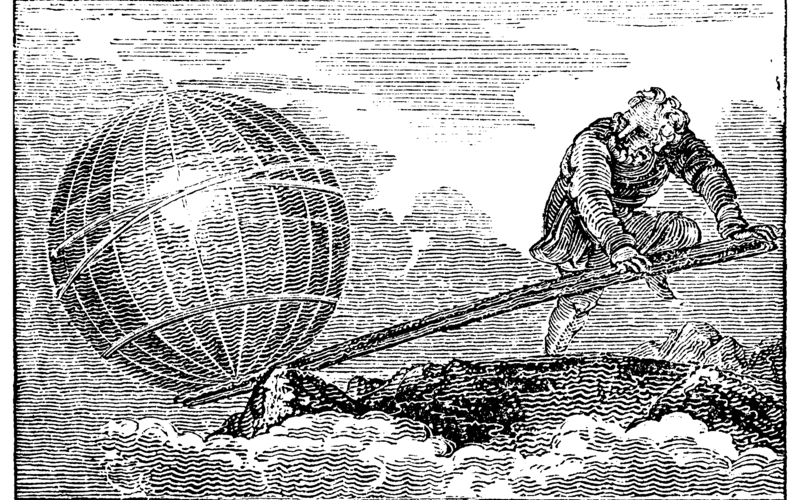
But there is a very large leverage that is available to us which can multiply the value of time and make its value with money non-linear. The fractal nature of 80:20 can make, some “time” worth more in money than others.

This typically happens with mentors, coaches and customers who are willing to help you. To some ,like coaches, you can pay to learn something, to others you first give and then get.

I distinctly remember that when I was in my first year engineering in university, I was just not able to pick up a subject called Engineering Drawing. Maybe the professor’s wavelength and mine didn’t match and I flunked badly. Then my brother identified another professor and I took coaching from him and he taught me so well that not only did I excel in engineering drawing, for years after and till now I can explain the the structure of a mechanical system so clearly.

The amount of time that I spent in coaching was much less than the time I spent in taking the classes in college. But the impact was far more dramatic.

In our company, while we have a team which does scouting for accounts, our fastest and more profitable business happens because of referrals that we get because of our relationships. This is true for any company. If you manage relationships well, you can get massive dividends. The time spent on managing the relationships can give you returns far far higher than what you would spend in scouting for business linearly.

But to build relationships, you need to always be willing to give first, to help people first rather than go wit an entitlement attitude. Not all people you help will reciprocate, but those who do will more than compensate for the others. So go out and build relationships.

Till next time then.

Carpe Diem!!!

Leverage – Sales

Leverage, Sales, Time

For a sales person, the biggest consumable she has is time. If it’s gone or wasted on worthless prospects or prospects who are only out there to take “gyan” or knowledge then your income reduces by that much.

For most people who work for someone else, they sell their time for money. With sales people the advantage is that they can get incentives which can really multiply their earnings. So there is a lot of leverage on their time. And the more leverage that they can build, the more they can get rich.

So one is clearly identifying the accounts you want to work with. Sometimes the company would decide this and you have little options. Sometimes the company that you work for may also limit the products/services that you are allowed to sell. That makes life a little more challenging.

In that case the other big leverage that you can get is by using referrals. If you can create happy customers and they can refer other customers to you, then you can get an amazing amount of leverage on your time. Happy customers are always the best source of new business because then there are less hurdles to cross even with the company you are referred to.

Most sales people however feel scared to ask for referrals because they think the customer is doing them a favour. I also used to feel the same way and used to ask it in a very apologetic manner. However, has a friend asked you for help identifying a good “Chinese” restaurant. You have felt happy to recommend a restaurant, if you have had a good experience. This thought was brought out to me by Dean Jackson and Jay Abraham and since then I keep thinking about various ways to be in front of my customer when they are having a conversation where I can be of help. Think from this angle.

Everyone has a time constrain, but for sales folks it has direct impact on their earning capability so choose your customers well and figure out ways that you will create happy customers and then create ways to get a steady state of referrals.

Till next time then.

Carpe Diem!!!