Getting blindsided in product management

Assumptions, differentiation, differentiation, Marketing, Product Management

When an idea for a product or service is our baby, even though we ask ourselves and all our team members of the possible issues that the product (or service) may have, we miss out on some of the most elementary things. This generally happens because all our team members get involved in group think.

For a product management guy getting blindsided by this kind of mistake ends up being most expensive , as you don’t realise “what hit you”. What you think as an essential differentiation could be a worthless factor which increases costs.

On the other hand two simple mechanisms that I use to try to exploit all the possible lacunae or weak spots in my thinking are:

  1. Red team, blue team: In thisI make it into a game where I have one team specifically work on figuring out all the items about my offering that the other team can utilise to beat my product. This is the same concept that armies of friendly countries use during their war games. Once the fatal flaws are identified, you then go about correcting them before you get into the market. Sometimes in these exercises, I have also heard comments like – “there is nothing about your product that we even need to bother about, we can beat it very easily”. If you hear this kind of a comment, it means you are in deep trouble. If your internal team doesn’t think your product has any strengths, then you better figure out something new.
  2. The second method I have found useful is to get a finance guy to figure out the plan and numbers. Typically finance guys are very good at doing a post-mortem and want artefacts for every assumption for all their bills. They will ask you for all your background checks and will help you surface the assumptions.

Getting internal people telling you all the possible negative feedback helps you build a much better product offering.

Till next time then.

Carpe Diem!!!

Habits – Path Dependence – 2

competition, differentiation, differentiation, ideal customer, Marketing, segmentation, single target market

In my earlier post I wrote about why Path Dependence can be a big barrier to success. The reason this is important when we look at Marketing and Product Marketing is that the market and the competitors are always changing. The customers change, the way they like to interact with suppliers changes, their priorities change. The way your competition reacts to these changes with their offerings and how you react all need to keep up with these changes

So the solutions which helped you become successful previously may not make you successful now. It happens to me all the time. Whenever I keep trying to use the same old data points, the same old methods and things don’t work I have to start going down to basics.

Habits are good , as I have said multiple times before, because they help cut out the energy requirements from our life , but the same habits become a baggage when you have to change to meet new scenarios. Habits work on path dependence.

While the basics of targeting a single target market, differentiation , segmentation, all remain as is, what changes is the way you address a customer. There was a time when you reached out on the phone to people. Then people. got Caller id phones and if they didn’t recognise your number you got diverted to voice mail. Then came email. But if you were still stuck on phone as primary method of prospecting and didn’t adapt to email prospecting you would be long gone.

So while habits are good, energy & time efficient, sometimes when things are not working out you need to look at another path to see if it can take you to your destination.

If you look at India’s history as an analogy, one of the reasons that they were able to conquer our country and rule it for almost 150 years was because they came with guns, while the Indian kings at that time, still had their armies using swords and spears.

In marketing if you don’t carry the ability to go back to basics to figure out what is causing your team to fail, then you won’t last long. Sometimes you have to change the teams just for this reason, because if they are not willing to change, you have just two options – either die a slow death or change the team and live to fight another day.

Till next time then, don’t let path dependence stop. you from exploring new solutions.

Carpe Diem!!!

Product management concepts for a consumer company -2

B2B, differentiation, differentiation, ideal customer, Marketing, Positioning, route to market, segmentation, single target market

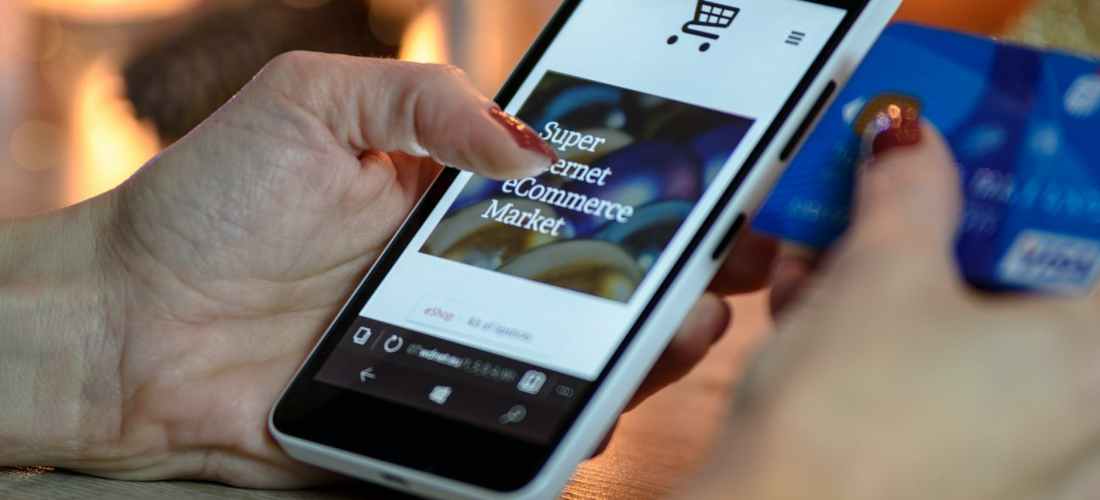
Product management is actually a much stronger discipline with consumer companies – both in the FMCG and White Goods space. What has happened with the e-commerce companies is that they have actually taken the whole consumer marketing concept to a different scale. Having said that, all the companies which are successful even in the e-commerce space, have followed the basics of marketing / product management to the core.

What started this series of posts was the fact that while these companies were burning massive cash, they were still enjoying heavy premiums when they get listed in the stock market. So is it that they are blindly burning cash or is there a method to the madness.

I highlighted some of the concepts in yesterday’s post. Today let’s look at other things like Single Target Market. Amazon today is a very big market place where they sell their own products as well as provide a platform for others to sell and take a commission on items sold. But Amazon only started by selling books initially. They did not try to get into selling everything at once. And they just sold books first in the Americas before expanding.

Look at another company Uber – they were only the ride hailing App. They did not get into the Uber Eats or the Uber Connect till they had taken a dominant position in that market. Similarly Zappos – which is now part of Amazon – was only into selling shoes.

Generally when I talk of concepts and give ideas for targeting the customers, building partnerships, I speak from the perspective of a small or mid-sized company which is wanting to get into the market. So some of the ideas are very specific.

However the same concepts at a different level are also applicable over the e-commerce space. So while Amazon is a big daddy in the retail products space, a small start-up in India “Nykaa” started with just selling cosmetics and related products to ladies. Today if you want even a French perfume in India, your first port (in this case App) of choice would be Nykaa. Its become such a big brand for the cosmetics and related categories. Similarly in the fashion space its “Myntra”. These companies segmented the market even within e-commerce and specialised in certain areas and have made a success out of it.

So principles of marketing and product management won’t change, what could change is the scale, the risk and the delivery mechanisms.

Till next time then.

Carpe Diem!!!

Marketing is Education – Part 4

differentiation, differentiation, education, Marketing, Positioning, route to market

How many of you have heard of the perfume brand ….Fragonard

When we think of perfumes, the typical names which come to our mind are Nina Ricci, Channel, Givenchy, Boss etc. Fragonard…never heard of it, or at least I had never heard of it.

When we went to Paris, we had taken the Paris Pass. One of the coupons as part of the Pass was the visit to a perfume museum where they would show you how perfumes are made.

So we decided to take the tour because we had never seen perfume being made. They had various language guides and the moment they had a large enough crowd they would start the tour. Our guide was tremendous. Inspite of the fact that she was French, she spoke very clear English and explained the complete history of how the initial perfumes got made, then how the various flavours and fragrances are created etc.

After the history and the processes she spoke about how perfumes evaporate, how they should be kept, what kind of containers should be used, and the concentration levels if the perfume has to last long on your body.

All this information you need to understand was biased towards what they were offering. This is not to say they were giving wrong data. They were however showcasing data that got you oriented towards their offering.They also took up the issue of not doing mass advertising to create a brand awareness, head-on, and eliminating it as a objection, as part of the education process. This differentiation of using education rather than showing models has kept them in good stead. They have been in business for more than 100 years I think.

All the queries were so masterfully handled by the guide, it was as if she was an amazing teacher.

At the end of the tour then she came up with the offer, since we had spent time visiting them, only at that time (limited time / scaricity )from her (reciprocity)- because she had given all this education free of cost to us, quite a few of us ended up buying a lot of perfumes.

My family and I had not gone with any agenda to buy, we still ended up buying more than Euro250 worth of perfumes. And the bigger fact is that we didn’t have a buyer’s remorse, that we had been tricked. We were actually feeling so happy that we got such good perfumes.

As a sidebar – the perfumes are really good, they do last much longer than the other brands even in the hot weather of India because the concentrate level is much higher than others. Also since they are packed in metal containers , unlike most other brands which are packed in glass, these last much longer in the bottle also.

You see the benefit of the education they gave me, I have given you the exact things they taught me about what should be seen while buying a perfume. They have made a permanent client. Whenever I go to Paris, Fragonard….will be on my list of places to visit to buy perfumes.

Can you see how you can utilise education to create a strong image in the mind of the customer.

Till next time then.

Carpe Diem!!!