Marketing lessons to learn from the success of Singapore

Leverage, Marketing

LEVERAGE YOUR ASSETS

Merry Christmas and Happy Holidays!!!

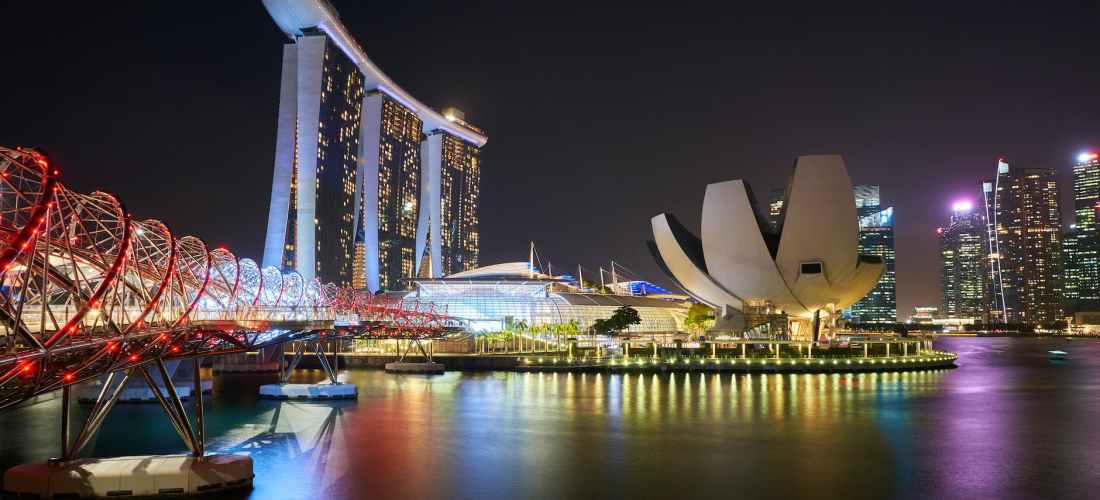
Recently I visited Singapore with my family. I used to visit Singapore on office work, very frequently, during the years 2000-2005, but I had not visited it since 2005. This visit was therefore close to 18-19 years since my last visit. During those years, what a way Singapore has changed. I was viewing Singapore as if I had come there for the first time. Except for may be the Orchard Road, Little India, China Town and the Night Safari, everything else, seemed new to me.

This made me all the more curious. Singapore has over the years gone on to become one of the richest countries in the world with a GDP per capita of $82000/ – which is way more than the GDP per capita of $57000/- about a decade ago. And this is despite the fact that Covid had taken a big toll on the tourism industry in Singapore.Last year about 6.3 million international tourists had arrived in the country – which is roughly same as the population of the country. This is much better than 2021 but much lower when you compare it with the numbers in 2013 onwards. At that time they would get almost 2-3 times this number according to the website Statista.

Now if f you look at Singapore’s geography, they are an extremely small country. They are right in the middle of the Indian Ocean with other nations like Indonesia, Malaysia surrounding it. Yet it is the most developed country in that region.

Services contribute a major portion of the revenue of the nation – but within those, in my opinion it is

  1. Trade
  2. Global finance &
  3. Tourism .

This is where I think the actual study comes in. I am not sure if there’s a thought to the process, but Singapore has made its so called weaknesses as its strengths. It is continuously upping the ante on its competitors by leveraging on the resources that it has.

Let’s start with the first item – Trade.

Singapore is one of the busiest ports in the world. They have taken advantage of their position in the middle of the Indian Ocean to ensure, that they are the hub for all the ships moving to&fro between Europe, Africa and Asia towards, Japan, China, Korea and Australia/New Zealand. They have ensured that they continuously upgrade their technology and machinery so that they have the most efficient ship handling facilities in the region such that there is a quick movement within the port.

Even the Changi airport is the 5th busiest airport in the world. With most people/goods wanting to go towards Australia , New Zealand, Philipines from India etc. preferring to stopover or take a connection via Singapore. The airport itself has been made so efficient that inspite of being such a busy airport, you never have a feeling of being rushed, because of crowds.

Now lets look at the second item – Global Finance

Singapore has the most well articulated legal system and very stable laws. Any finance organisation looks for stability and rule of law. So even though it’s a very small country a lot of the finance activity that takes place in the ASEAN and South East Asian region, happens out of Singapore. There was a time when Hong Kong had (that time as a British colony) a lot of finance industry, but since Hong Kong has merged with China, a lot of the finance industry prefers to operate out of Singapore. The other advantage because of its location is that, the time difference between all the nations in the Asia Pacific region and South East Asia is not more than 3-4 hours. Which means that people in all the countries can coordinate with their offices in Singapore in almost real time. Again leveraging its location.

And finally the third item – Tourism

Tourism is a big-time employer. Whether it’s hotels, eateries, momentos, taxis, it creates jobs all across. With more 6 million tourists that visited last year, it is almost the same as the population of Singapore. But to ensure that tourists keep coming year after year, Singapore has had to reinvent itself continuously. Since it doesn’t have a very old history – say like India – or mountain ranges like say Switzerland, Singapore has to keep doing things within its limited area to get in tourists by the hoards. All the children who visited Singapore in the 80s and 90s remember Sentosa island. So now they have added Universal Studio, Madame Tussaud’s and more to all the activities that existed at Sentosa. For me therefore, it was a completely new experience visiting Sentosa.

Tourism also needs, safety of the travellers. Singapore excels in that. And now if you add the efficiency of the airport, which can bring in millions of passengers, you have each strength playing into another.

In subsequent posts, I will dissect the tourism, part further and how its such an amazing marketing case study.

Till then….

Carpe Diem!!!

Entering a new technology based B2B business – Part XII

B2B, checklist, Marketing, Technology

Targeting to become the market leader in 5 years

This is the last part of the 12 point checklist that I follow to identify whether we might be able to succeed with a new product or service line. Originally I intended to call this post – Targeting to dominate the market. But then I realised that the word dominate could also have negative connotations. So I renamed it as becoming a market leader. However in the content, you will see the use of the word “dominate”. The idea is only to bring out a forceful point.

In the last post, I brought out a concept of Life Time Value of a customer. This is a concept, I first came across, while reading books by Jay Abraham. Subsequently, a lot of other US authors/marketing consultants also wrote about it.

This is a fairly simple concept. If you pick up an order from a customer, and you provide them with a good experience, then what is the amount of business, she can give you over an extended period of time, that she remains a customer. This can define at what value you can acquire a customer, such that in the long run you can make a profit which is much higher, than if you had not acquired a customer.

Related to this concept is also the concept of becoming a market leader. So you look at any business and see if you can be a dominant player in that market. When that happens , the momentum also helps you bring in business.

But to be able to dominate the market, you need to be able to identify the total market size. Then you need to see, how much business will you be able to pick up in a year, then two years etc. Now if, in 5 years, you think you can pick up a substantial part of the overall market, and at that revenue level you are making good money, then its worth getting into the market.

On the other hand, if you realise that even after 5 years – either you are not able to pick up enough business or even if you can pick up the business, you can’t make profit, then, its not a market worth entering.

Combined with the life time value of a customer, you can determine the marginal cost of acquiring a new customer, and then the velocity that you can create, because of repeat orders, referrals etc.

If on paper you can work this out, and it’s profitable, then you actually go out into the market and test your hypothesis. At the end of the day, the market determines your success or failure. But if you have taken care of as many challenges, that can occur, you increase your chances of success.

To the success of your product / service launch.

Carpe Diem!!!

Entering a new technology based B2B business – Part XI

B2B, checklist, Marketing

What are the backend opportunities available to you

If you have read some of my earlier posts, I have talked about the Life Time Value of a customer. I came across this concept , first, when I read Jay Abraham’s works. If you haven’t. heard of Jay, you should go and look him up on YouTube or Vimeo. He has an amazing number of thought provoking, marketing related videos.

Now coming to this episode, on the checklist that I have been running for the last few weeks. It doesn’t make sense to acquire a customer, if you are only going to do one transaction with them. In a B2B context, it’s extremely expensive to acquire a customer. Expensive both from time and money perspective. At the end of the day, you are running a business or product line. You are not running a charity.

So every customer has to become profitable for you. You may initially acquire the customer at cost. But you should be able to sell him more of the same product or other products or services, which can then get you profitable.

To be able to take a decision to acquire a customer, even at cost, you need to be clear, from the beginning, about the life time value – simply put, what else can the customer buy from you and how often, over a period of time that she remains a customer with you.

For example – we acquired a global television brand as a customer by just selling an item worth about $20K in the first transaction. Over the next five years that company gave us more than 0.5 million dollars of business. This would not have happened, if we had not taken the first low value order. Of-course the caveat is, that you will provide the customer with exceptional service in the first deal and in all the deals, so that they stick to you and want to keep doing business with you.

The advantage of B2B, that I have reiterated multiple times earlier also, is , that there is a lot of inertia in corporates. If they have a good supplier for something, they don’t want to waste time, trying to identify a new provider. So once you get in and provide exceptional service, B2B buyers will generally ensure that you have continuous business from them, even when they know you are not the cheapest. That is because they value reliability over cheapness.

So whenever you launch your new product/service, please also analyse and see, what will the customer need, after they have used your product/service. Can you help them realise more benefits, in areas other than the one they have initially taken from you. May be you start with some product or service from the plant, can you go to their finance and offer something else, or can you go to marketing and provide them something. Then see if the revenues from all these backend services will be worth doing the first transaction with the customer at “cost”.

In my next post I will elaborate further on this concept and how you can use this concept to dominate the market.

Till next time then.

Carpe Diem!!!

Entering a new technology based B2B business – Part X

B2B, Marketing, Marketing Stamina, new launch

Is the solution dependent on a specific platform or product to be able to deploy

It has multiple times for me. We thought we had a niche market, where we were the dominant player and anyone who needed the service, had to at least check us out. But then the base product, on which our services were based, suddenly started losing market share. New upstarts started capturing the market, for that product, with their offerings and suddenly within a matter of a couple of years, we had lost a complete line of business.

So as a matter of policy, now, whatever new service we launch, we make it a point to ensure that the services can be deployed across multiple platforms without any significant disruption in our revenue.

If you look at other industries also, you will find a lot of such examples. In the telecom space, with the CDMA technology becoming obsolete, all the companies that only made CDMA phones, suddenly had to rethink their operations.

In case you were making software for the Blackberry phones, with the advent of Apple and Android phones, the demise of Blackberry phones was amazingly sudden. So if you were building software, that required the code or security, of Blackberry, to make it run, you were also suddenly out of business.

So while this post is short, if you have been reading my posts on this subject over the last 8-9 weeks, then you will realise the benefit of this item on the checklist. Ticking this item will ensure that you have sustaining power in the market.

Sometimes it so happens, that we forget this point, because we get success with the first platform on which our solution is based and because the revenue is consistently flowing, no one wants to disturb something which is going on well. And then you get hit from nowhere.

So please ensure that you have multiple platforms available to port your solution.

Till next time then.

Carpe Diem!!!