Entering a new technology based B2B business – Part XI

B2B, checklist, Marketing

What are the backend opportunities available to you

If you have read some of my earlier posts, I have talked about the Life Time Value of a customer. I came across this concept , first, when I read Jay Abraham’s works. If you haven’t. heard of Jay, you should go and look him up on YouTube or Vimeo. He has an amazing number of thought provoking, marketing related videos.

Now coming to this episode, on the checklist that I have been running for the last few weeks. It doesn’t make sense to acquire a customer, if you are only going to do one transaction with them. In a B2B context, it’s extremely expensive to acquire a customer. Expensive both from time and money perspective. At the end of the day, you are running a business or product line. You are not running a charity.

So every customer has to become profitable for you. You may initially acquire the customer at cost. But you should be able to sell him more of the same product or other products or services, which can then get you profitable.

To be able to take a decision to acquire a customer, even at cost, you need to be clear, from the beginning, about the life time value – simply put, what else can the customer buy from you and how often, over a period of time that she remains a customer with you.

For example – we acquired a global television brand as a customer by just selling an item worth about $20K in the first transaction. Over the next five years that company gave us more than 0.5 million dollars of business. This would not have happened, if we had not taken the first low value order. Of-course the caveat is, that you will provide the customer with exceptional service in the first deal and in all the deals, so that they stick to you and want to keep doing business with you.

The advantage of B2B, that I have reiterated multiple times earlier also, is , that there is a lot of inertia in corporates. If they have a good supplier for something, they don’t want to waste time, trying to identify a new provider. So once you get in and provide exceptional service, B2B buyers will generally ensure that you have continuous business from them, even when they know you are not the cheapest. That is because they value reliability over cheapness.

So whenever you launch your new product/service, please also analyse and see, what will the customer need, after they have used your product/service. Can you help them realise more benefits, in areas other than the one they have initially taken from you. May be you start with some product or service from the plant, can you go to their finance and offer something else, or can you go to marketing and provide them something. Then see if the revenues from all these backend services will be worth doing the first transaction with the customer at “cost”.

In my next post I will elaborate further on this concept and how you can use this concept to dominate the market.

Till next time then.

Carpe Diem!!!
Entering a new technology based B2B business – Part IX

B2B, checklist, Marketing, Technology

Will the customer need any special additional things to be able to run your solution

If you have gone through the last 8 posts, where I have shared my checklist of launching a new technology based B2B business, then this post will be a logical next step.

Have you gone to the car dealership and seen a car which has the best features in the world and you could also afford it and you had the need and it was available in the color of your choice, with all the accessories that you wanted, but still did not buy it. If you have to buy a car which only runs on ATF (Aviation Turbine fuel), will you buy it? The car may be amazing and have the most incredible features, but if you can’t get ATF near you on a regular basis, you will not buy this car, because you won’t be able to use the car.

Similarly if you have a tremendous technical solution, for a B2B business, but the company will need specific additional inputs to get the solution to actually work out, then the solution will be a non-starter.

As I have mentioned many times earlier, if there’s even a slight amount of resistance in your solution, in a B2B environment, you will not be able to convince most customers to take your solution. Most B2B managers (whatever be the level of the manager) are risk averse. One, because of the peer pressure , where even a small mistake gets highlighted and could spoil the manager’s career and second, the inertia to move through various levels of the hierarchy to get approvals is extremely high and the questions that need to be answered, to get the approval is a major pain.

If after doing all the activity, they realise, that other than the solution, they also need to arrange for specific inputs which are either too expensive or generally unavailable, then they will just not want to take it forward.

There are some managers, who like to take risks and try new things, but even they will be averse to trying this kind of a solution which entails handling two different variables, where the outcome is not certain.

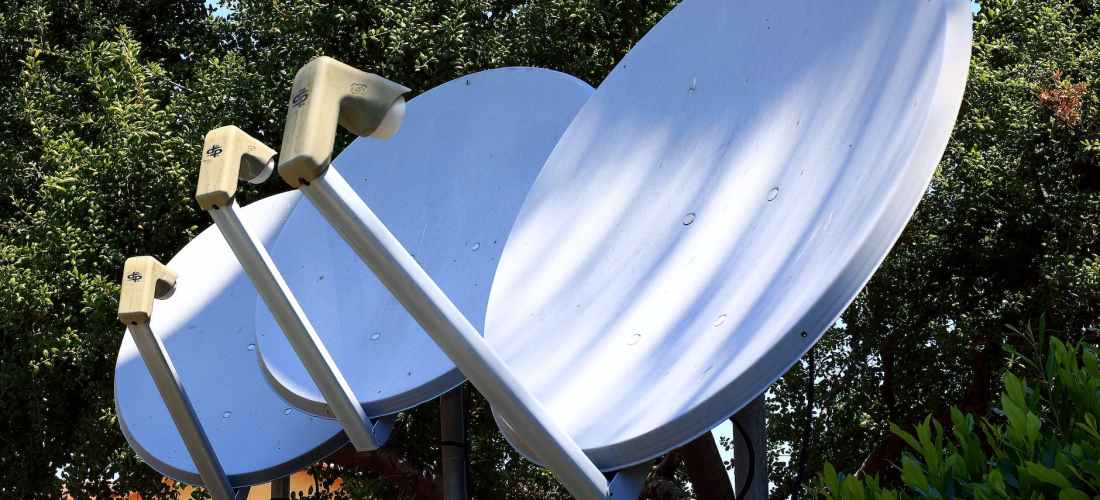
Has any of you heard of the satellite phone that was launched by Motorola, just before the GSM mobile phones were launched on a large scale. These were bulky sets which had a huge cost of the phone as well as the cost of making the call. You had to specifically carry it in a specialised case. And Motorola had to launch multiple satellites to ensures that there was coverage across the world, all the time. Without the satellites, the phone wouldn’t work (specific item).

The positive of these satellite phones was that, you could be anywhere on earth (except in water) and you could make a call to your dear ones, by connecting via the satellite. So this was a unique proposition. But the cost, the size and carrying such a bulky phone in a special case, were big resistance points and the competitive GSM technology was available at a fraction of a cost.

So until and unless you were climbing mountains or going on treks in the forest, where there was no GSM “tower”, you would not need a satellite phone. Many millions of dollars later, Motorola just got out of the business.

So you may have a great solution, which is technologically very advanced and has a unique value, but if the customer sees resistance points (at your end – like the satellite, or at their end – like the ATF fuel) they will just not move forward.

So build your solutions which can run on generally available infrastructure or commodities and then take it to the market.

Till next time then.

Carpe Diem!!!