Entering a new technology based B2B business – Part IX

B2B, checklist, Marketing, Technology

Will the customer need any special additional things to be able to run your solution

If you have gone through the last 8 posts, where I have shared my checklist of launching a new technology based B2B business, then this post will be a logical next step.

Have you gone to the car dealership and seen a car which has the best features in the world and you could also afford it and you had the need and it was available in the color of your choice, with all the accessories that you wanted, but still did not buy it. If you have to buy a car which only runs on ATF (Aviation Turbine fuel), will you buy it? The car may be amazing and have the most incredible features, but if you can’t get ATF near you on a regular basis, you will not buy this car, because you won’t be able to use the car.

Similarly if you have a tremendous technical solution, for a B2B business, but the company will need specific additional inputs to get the solution to actually work out, then the solution will be a non-starter.

As I have mentioned many times earlier, if there’s even a slight amount of resistance in your solution, in a B2B environment, you will not be able to convince most customers to take your solution. Most B2B managers (whatever be the level of the manager) are risk averse. One, because of the peer pressure , where even a small mistake gets highlighted and could spoil the manager’s career and second, the inertia to move through various levels of the hierarchy to get approvals is extremely high and the questions that need to be answered, to get the approval is a major pain.

If after doing all the activity, they realise, that other than the solution, they also need to arrange for specific inputs which are either too expensive or generally unavailable, then they will just not want to take it forward.

There are some managers, who like to take risks and try new things, but even they will be averse to trying this kind of a solution which entails handling two different variables, where the outcome is not certain.

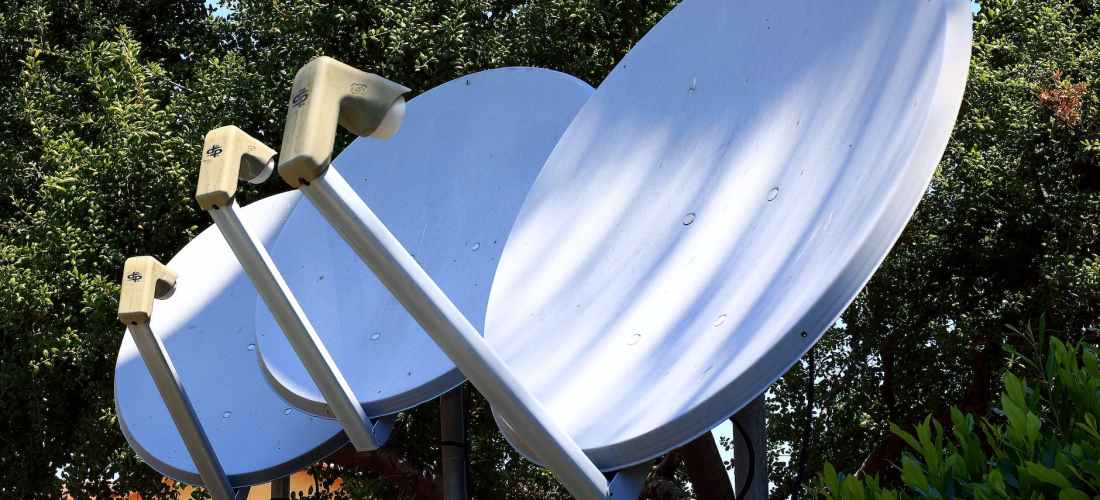
Has any of you heard of the satellite phone that was launched by Motorola, just before the GSM mobile phones were launched on a large scale. These were bulky sets which had a huge cost of the phone as well as the cost of making the call. You had to specifically carry it in a specialised case. And Motorola had to launch multiple satellites to ensures that there was coverage across the world, all the time. Without the satellites, the phone wouldn’t work (specific item).

The positive of these satellite phones was that, you could be anywhere on earth (except in water) and you could make a call to your dear ones, by connecting via the satellite. So this was a unique proposition. But the cost, the size and carrying such a bulky phone in a special case, were big resistance points and the competitive GSM technology was available at a fraction of a cost.

So until and unless you were climbing mountains or going on treks in the forest, where there was no GSM “tower”, you would not need a satellite phone. Many millions of dollars later, Motorola just got out of the business.

So you may have a great solution, which is technologically very advanced and has a unique value, but if the customer sees resistance points (at your end – like the satellite, or at their end – like the ATF fuel) they will just not move forward.

So build your solutions which can run on generally available infrastructure or commodities and then take it to the market.

Till next time then.

Carpe Diem!!!

Entering a new technology based B2B business – Part VIII

B2B, Marketing, Technology

Are there any regulatory clearances to be taken to implement your product/solution

You may have heard , from time to time , issues that ride aggregator apps like Uber face , from local governments in various countries. Some countries have laws which require cabs to be commercial vehicles – private cars cannot be used for this business. In some states there are laws, where dynamic pricing is not allowed.

If you have been reading my blog thorough this whole series, I have taken up one issue at a time, that you need to keep in mind before launching either a new business itself or a new service / product line within an existing business.

While the Uber example above is a consumer related business, the issue remains the same in case of B2B businesses as well. In case of B2B business the added complexity happens because people are anyway averse to change anything which is “not broken”.

There was a time, in India, when we had to fill multiple forms and file with the government agencies, when changing the bandwidth on leased lines. So each time our requirement for bandwidth would go up, we would have to question all the concerned departments on “why” the need for more bandwidth. It was just the hassle of filling up and signing forms and then going through the government departments to close the issue.

So in case your solution requires certain government clearances, before it can be deployed, then figure out how it will be done, without the customer having to go through the hassle of applying to government agencies. If the customer is expected to do it, then rest assured, you have brought a resistance point in your business.

Make the process as frictionless as possible. As an example, drones need clearances from multiple agencies, before they can be deployed by commercial entities, because they can hamper aircraft traffic or can cause national security issues etc.

So some companies came up with drones which had a limitation on the height they could achieve and now drones are being used to spray pesticides on crops, in so many parts of the world, without having to take permission, because they don’t have the ability to cause any challenge to aircraft traffic.

Whenever regulatory issues are involved, either find a way to solve it for the customer or better still create the product or solution in such a way that the regulator doesn’t need to get involved.

In all sales, especially more in case of B2B, you have to remove all points of friction, which can make a customer avoid taking the solution. That will be the only way, you will be able to scale.

Till next time then.

Carpe Diem!!!

Entering a new technology based B2B business – Part VII

B2B, Marketing, Marketing Stamina, Technology

What other solutions are available to solve the same problem

If you are reading this series of blog posts for the first time, then I would suggest you start with Part I of this series, so you are able to get the sequence of activities. You could also read this one and if you find it interesting, you could read the whole sequence.

So if you prefer to read this first, the idea over here is not about starting a brand new business only, though that could be the case. The idea is to have a checklist , when you are starting a new service line or launching a new product etc. in the technology domain or a new business, so that you try to cover all the bases, so that there are fewer surprises, when you are out there in the market.

Generally in most B2B cases, companies have been doing business for years. In most cases, the problem that you are trying to solve, may not be a unique problem. The solution that you have developed may be unique, but the problem, may not. If that be the case, then, chances are, that companies have already found a way to solve the problem.

Then the question that you need to ask yourself is, if the solution that you have developed so unique that it gives them benefit, which is multiple times, what they are already getting.

This is an important point, when you are doing business in B2B. Customers in B2B have way too much inertia. Therefore when you ask them to change, in their mind they come out with all kind of reasons why this solution that you have brought will fail. And no manager worth his salt will like to fail in B2B. The peer pressure is way too high.

So if the benefits you are offering with your solution are a magnitude higher than what they presently get, then they may be willing to listen to you. If not, then , they won’t even be bothered to listen to you.

So keeping an eye on what is happening in the market at the moment and how customers are presently solving the problem is critical.

If the benefits you offer, are say 3X of what they are presently doing, then, they could start discussions. Having said that, however if the direct cost of getting these benefits is 5X, the present cost, then again, you are not going to be able to move ahead.

The other thing that you need to keep in mind is that there will be some early adapters, who like to try new things, but “crossing the chasm” as Geoffrey Moore calls it, is another ball game. Basically reaching critical mass is tough when you are getting into a new market. You need to have the tenacity aka Marketing Stamina, to carry the product from the early adapters to mainstream and then late comers.

Tenacity both in terms of “having the finance” to sustain the business while you pick up more and more users, as well as the patience to be “at it” consistently. A lot of times, persistence does the trick, more than anything else.

So look out for all the ways people are presently solving the problem and figure out how you will counter the customers objections to your solution.

Till next time then.

Carpe Diem!!!

Entering a new technology based B2B business – Part -VI

B2B, Marketing, single target market

What is the smallest size of the addressable market

In the last episode I wrote about the technology infrastructure that is needed to ensure that your market entry is successful. If you have not read that post, I would highly recommend that you read it here.

If you have determined, that the technology infrastructure exists in the overall market, then the next step is to identify what is the minimum size of the addressable market.

So why is this important?

All the investments that you make for entering the market, have to be justified by the returns. Let’s take a hypothetical example of the overall market size of the market being $100 and the market that you can address out of that is $60. Now you won’t be able to win all the business in the addressable market. Let’s assume you want to dominate the market, then a 30% market share is generally the maximum you can get. Which means you can make upto $18/-.

If the investments that you make are more than $6-$10, over the time period to get a revenue of $18, then you may just about break even or make a profit, depending on your profit margin. If however the investment needed to pick up the $18 of revenue, is $50, over the same period of time, then you are entering a losing game.

If you go through my earlier posts, you will read about my philosophy of “Riding the Elephant” if you are a small technology services company. By riding the elephant (symbolism of a large product company), you can penetrate a larger piece of the market because the elephant will help you get there faster.

The downside in this approach is, however, that the “elephant”, may itself, not succeed in penetrating the market. If however you have made investments on the technology that the “elephant” is bringing without first figuring out the minimum addressable market then you can end up making a huge loss.

It has happened to us in quite a few instances and that is why today this forms a major portion of our evaluation criteria.

You also have to look at a holistic picture, when you are taking a business decision. Maybe this product or service that you are bringing to the market, itself does not have a large addressable market. But because of the image this technology entry will give you, you may gather customers in allied areas, who would not have come to you, otherwise. Then this decision becomes an investment decision rather than just a product line decision.

So while this is an important part of the checklist for getting into the market with a new product or service, the overall decision should be based on the direction you want the business to take.

Till next time then.

Carpe Diem!!!